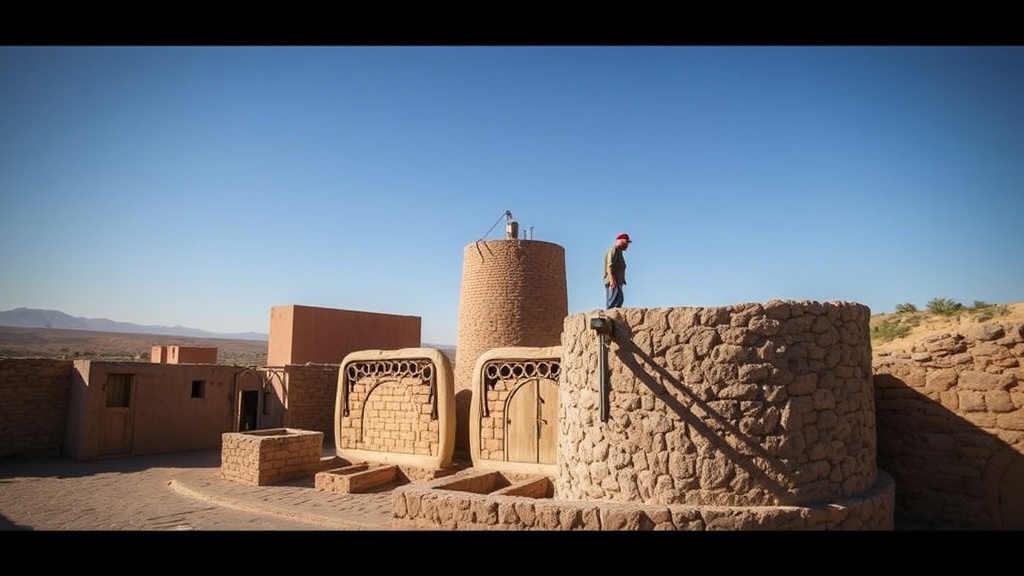
Echoes in Stone: Observing Morocco's Timeless Grain Mills

Echoes in Stone: Observing Morocco's Timeless Grain Mills
Approximately 70% of Morocco’s population considers bread—khobz—a fundamental part of almost every meal, a reliance that underscores its deep cultural significance. Beyond mere sustenance, bread acts as a cornerstone of community life, particularly in the High Atlas Mountains where ancient traditions continue to shape daily rhythms. This piece observes the enduring practice of community grain milling and daily bread preparation, revealing how these age-old customs knit together the fabric of rural Moroccan society and offer a quiet testament to shared existence. We'll explore the sights, sounds, and silent understanding that define this timeless ritual, away from the bustling souks and tourist trails.
For those living in the High Atlas, the journey to a local grain mill is not merely a chore, but an ingrained part of weekly life. Before dawn breaks, figures begin to emerge from their homes in the valleys and perched villages, often women, carefully balancing sacks of wheat or barley on their heads or slung across donkeys. The path is frequently uneven, a track etched into the earth by countless generations of feet and hooves, winding past terraced fields and ancient olive groves. The air, crisp and cool in the early morning, carries the scent of damp soil and distant woodsmoke. It's a rhythm dictated by the sun and the seasons, a quiet procession that speaks volumes about perseverance.