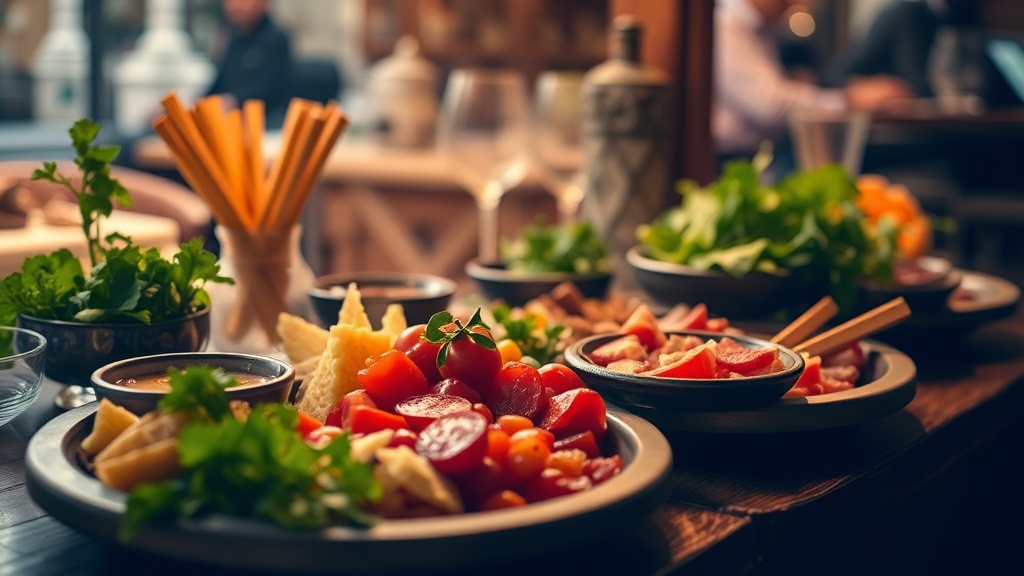
Finding the Perfect Mezze Spread in Istanbul

A small metal tray sits on a low wooden stool in a narrow alleyway in Kadıköy. An elderly man, his hands mapped with deep lines, carefully arranges slices of salted watermelon and a block of white feta. There is no neon sign, no digital menu, and no hype. There is just the rhythmic sound of a knife hitting a wooden board and the quiet steam rising from a nearby pot of tea. This is the beginning of a proper meal in Istanbul.
Finding a great mezze spread in Istanbul isn't about finding the most expensive restaurant on a TripAdvisor list. It's about understanding the geometry of the table—the way small plates of olives, dips, and grilled vegetables work together to tell a story of the season. This guide breaks down how to identify quality, where to look, and what to order so you don't end up with a plate of overpriced, lukewarm vegetables.
Where Should You Eat Mezze in Istanbul?
The best way to find authentic mezze is to look for high-density, local neighborhoods like Kadıköy or Beşiktaş rather than the tourist-heavy pockets of Sultanahmet. While the Grand Bazaar area is beautiful, the real soul of the Istanbul table lives in the side streets of the Asian side or the residential hills of Beyoğlu. You want places where the menu changes based on what the fisherman brought in or what the farmer delivered that morning.
Look for Meyhanes. These are traditional taverns where the focus is on slow eating and conversation. A true Meyhane isn't a place you rush through. It's a place where the rakı—the anise-flavored spirit that is central to the experience—is sipped slowly alongside small plates. If the restaurant has a heavy emphasis on "Instagrammable" decor, keep walking. You want the place with the slightly worn tablecloths and the heavy ceramic plates.
If you want to research the history of these dining traditions, the Wikipedia entry on Meze provides a great foundation for understanding how these small plates evolved across the Ottoman Empire. It's a culinary tradition that connects the city to much larger parts of the Mediterranean and Middle East.
Here are a few types of establishments to keep an eye out for:
- Esnaf Lokantası: These are "tradesman restaurants." They serve hearty, home-style food in a cafeteria-style setting. Great for a quick, cheap, and incredibly high-quality lunch.
- Traditional Meyhane: The classic spot for a long evening of mezze and rakı. Expect a more formal, slower pace.
- Fish Restaurants (Balıkçılar): Located mostly along the Bosphorus or the Golden Horn. These are the heavy hitters for seafood-based mezze.
What Are the Essential Mezze Dishes to Order?
A balanced mezze spread relies on a mix of creamy textures, acidic brightness, and salty depths. You don't want five different things that all taste like lemon; you want a spectrum. A good rule of thumb is to order one or two "creamy" items, one or two "acidic" items, and one or two "warm" or "savory" items.
For starters, you can't go wrong with Haydari. It's a thick, creamy yogurt dip infused with dried mint and garlic. It provides a cooling base for the more aggressive flavors on the table. Then, there is Muhammara—a rich, slightly spicy walnut and red pepper dip that adds a much-needed textural weight. It's thick, slightly grainy, and deeply satisfying.
The heavy hitters of the table often involve vegetables. Look for Imam Bayıldı (an eggplant stuffed with onions, garlic, and tomatoes) or simple, high-quality Zeytinyağlı dishes. These are vegetables cooked in olive oil and served cold or at room temperature. They are the backbone of the meal. If you see a dish of charred octopus or grilled calamari, grab it. The char provides a smoky contrast to the creamy dips.
The following table compares the three main categories of mezze you'll encounter to help you build your order:
| Category | Common Examples | Flavor Profile |
|---|---|---|
| Cold & Creamy | Haydari, Baba Ghanoush, Hummus | Cooling, smooth, and mild. |
| Acidic & Bright | Olive Medleys, Pickled Vegetables, Taramasalata | Sharp, salty, and palate-cleansing. |
| Warm & Savory | Grilled Halloumi, Calamari, Stuffed Eggplant | Smoky, salty, and substantial. |
It’s worth noting that the quality of the olive oil used in these dishes is the single biggest indicator of a good kitchen. If the oil feels heavy or "greasy" rather than clean and bright, the kitchen is likely cutting corners.
How Much Does a Mezze Meal Cost in Istanbul?
A typical mezze meal in a mid-range restaurant will cost between 400 and 800 Turkish Lira per person, depending on how much alcohol you consume. This is a rough estimate, and prices in Istanbul can fluctuate rapidly due to the local economy. If you are eating at a high-end seafood restaurant overlooking the Bosphorus, expect to pay significantly more—sometimes double or triple the price of a neighborhood Meyhane.
To keep your budget predictable, follow the "one-plus-one" rule. Order one substantial warm dish (like grilled fish or lamb) and several small cold mezze. This ensures you aren't just eating a mountain of bread and dips, but you also won't be hit with a massive bill for five different expensive seafood plates. It’s a way to experience the variety without the sticker shock.
For those traveling on a tighter budget, the Esnaf Lokantası mentioned earlier is your best friend. You can often get a filling meal of vegetable-based dishes and a side for a fraction of the cost of a sit-down dinner. It’s the same way locals eat when they aren't celebrating something—just good, honest food. If you find yourself needing to manage your daily spending more broadly, you might find my thoughts on packing lighter and traveling more efficiently helpful for your broader travel planning.
One thing to watch out for: the bread. In many traditional spots, bread is a staple, but in some-tourist heavy areas, they might charge for it. It's rarely a major expense, but it's a small detail that adds up. Also, keep an eye on the "seasonal" menu. If a place is serving out-of-season produce, the quality will almost certainly be lower.
The beauty of the mezze table isn't in the complexity of the recipes, but in the quality of the ingredients. A single, perfect tomato, sliced thick with a sprinkle of sea salt and a drizzle of local olive oil, can be more memorable than a five-course tasting menu. It’s about the slow reveal of flavors. You don't eat to finish; you eat to linger.
When the meal starts to wind down, the ritual isn't over. The transition from savory to sweet is handled with a small glass of tea or perhaps a strong Turkish coffee. This is the natural end to the cycle. The conversation usually shifts from the food to the people around you, and the world outside the restaurant seems to slow down just a little bit more.
Steps
- 1
Survey the Variety
- 2
Balance Your Flavors
- 3
Check the Freshness