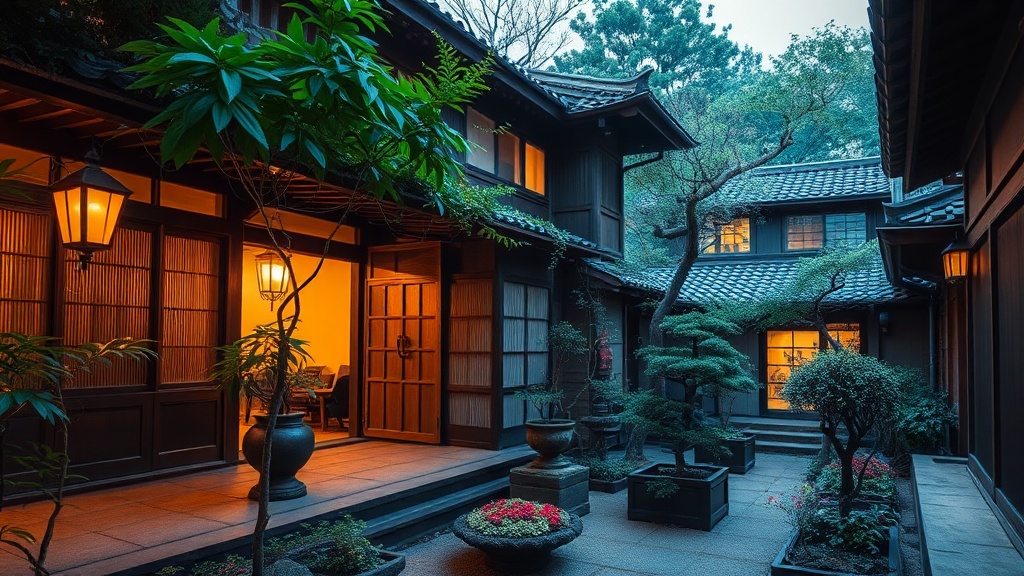
Hidden Courtyards and Secret Gardens of Kyoto

The Moss-Covered Sanctuary of Gio-ji
A Quiet Moment at Honen-in Temple
The Stone Path of Shisendo
Despite Kyoto's reputation as a city of massive temple complexes, nearly 70% of its most significant cultural assets are tucked away behind unassuming wooden gates and residential walls. This post explores the private gardens, hidden courtyard cafes, and small-scale Zen spaces that define the city's true character. You'll find specific locations, entry tips, and a guide to the subtle aesthetics that most tourists miss while rushing toward the Golden Pavilion.
Where Can You Find Secret Gardens in Kyoto?
The best way to find Kyoto's secret gardens is to look for small, neighborhood-scale temples (often called machiya or sub-temples) rather than the major landmarks. While the crowds gather at Kinkaku-ji, the real texture of the city exists in the quiet corners of the northern Higashiyama district and the narrow alleys of Gion.
One such spot is Shoden-ji. It's a small temple that sits at the foot of Mount Hiei. Most people skip it because it lacks the "grandeur" of the big names, but the view of the dry landscape garden against the backdrop of the mountains is something else entirely. It's a place where you can actually hear the wind in the bamboo. It's not about the spectacle; it's about the stillness.
Another essential stop is the Daitoku-ji temple complex. It isn't just one temple, but a walled precinct containing dozens of smaller sub-temples. Each one has its own distinct garden style. Some are strictly Zen rock gardens, while others feature moss and water. If you're looking for a place to sit and simply observe, this is it.
"The beauty of a Japanese garden isn't in what is added, but in what is left out."
— An old proverb often cited by landscape architects.
I spent a Tuesday afternoon at a small tea house near the Gion district, just watching the way the light hit the moss. There wasn't a single person taking a selfie. That's the goal here—finding the spaces where the environment dictates the pace of your breath.
How Much Does It Cost to Visit Kyoto's Hidden Temples?
Most small-scale gardens and sub-temples in Kyoto charge an entrance fee ranging from 300 to 600 JPY. This is a small price for the solitude you receive in return.
It's helpful to keep small denominations of Japanese Yen on you. While many larger sites might accept credit cards, these smaller, family-run temples often only take cash. Don't rely on your phone or a card at a small temple gate—it won't work. I've seen many travelers stand there awkwardly after realizing they're cash-only.
| Type of Site | Average Cost (JPY) | Best Time to Visit |
|---|---|---|
| Small Sub-temples | 300 - 500 | Early morning (8:30 AM) |
| Private Garden Cafes | 1,000 - 1,500 (Meal + Entry) | Mid-afternoon |
| Major Zen Complexes | 500 - 800 | Late afternoon |
If you're planning a longer trip through Japan, you might want to consider the Japan Rail Pass for regional travel, though for Kyoto itself, the local bus and subway systems are more than enough. Actually, walking is often the best way to find these spots. If you see a small wooden sign or a gap in a stone wall that looks interesting, follow it.
What Are the Best Hidden Courtyards for Photography?
The best courtyards for photography are those with "negative space"—areas where the simplicity of a single rock or a patch of moss creates a powerful composition. Look for the Karesansui (dry landscape) style gardens.
If you want to capture the essence of Kyoto without the crowds, focus on these three elements:
- Texture: The roughness of a weathered stone lantern against soft, green moss.
- Light: The way shadows from a maple tree fall across a wooden veranda (engawa).
- Framing: Using the dark wooden pillars of a temple to frame a view of a garden.
One place that captures this perfectly is Enko-ji. It's a bit further north, but the view from the temple's porch looking out over the garden is breathtaking. It’s a slow experience. You don't just snap a photo and leave. You sit. You watch the light change. It's a different way of seeing the world.
When you're out exploring, you'll likely be walking a lot. I highly recommend a good pair of walking shoes and perhaps a lightweight jacket. The weather in Kyoto can be temperamental—one minute it's bright, the next it's a light drizzle. I usually carry my Patagonia Nano Puff in my bag just in case the temperature drops near the temples.
The way people interact with these spaces is also worth noting. In the larger temples, people are often loud. In these smaller courtyards, there is a silent agreement to respect the stillness. It's a beautiful, unspoken social contract. If you're a photographer, this is your sanctuary.
To get the most out of your time, I suggest a specific approach to your daily itinerary:
- Start your day at 8:00 AM at a smaller, less-known temple.
- Spend at least 30 minutes in one spot without checking your phone.
- Look for the "edge" of the garden—where the manicured meets the wild.
- Use the local bus system to move between districts rather than taxis to save money.
There's a certain rhythm to these places. You can feel it in the way the gravel is raked. It's not just decoration; it's a record of someone's intention. Every sweep of the broom tells a story of maintenance and care. It's a quiet, repetitive labor that keeps these spaces alive.
As you move through the city, don't feel the need to check every box on a "top 10" list. The joy is in the unplanned detour. Sometimes the best thing you'll see is a single leaf floating in a stone water basin. It's a small, fleeting moment of perfection that most people walk right past. Don't be one of them.