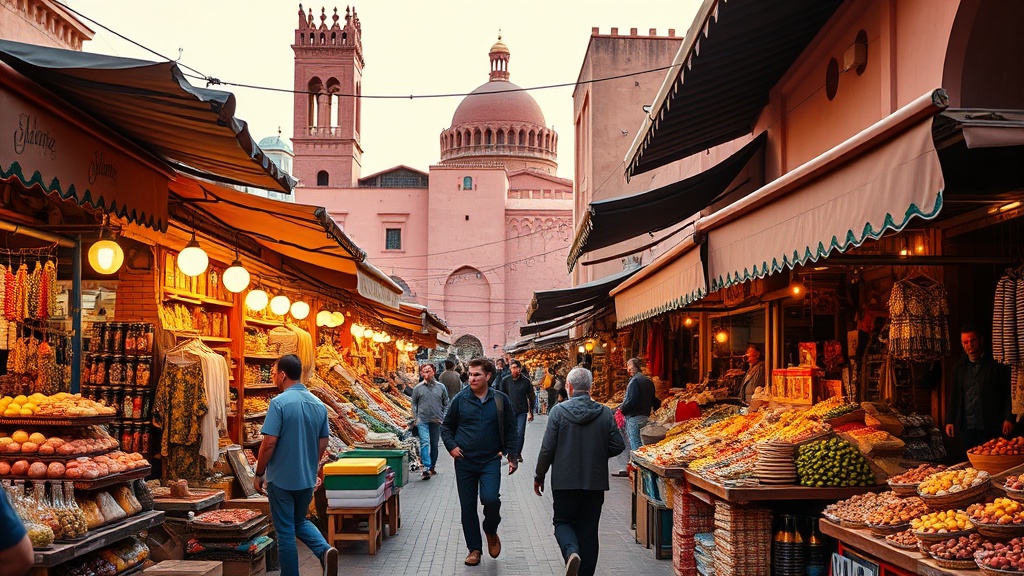
How to Navigate the Local Markets in Marrakech

Do you want to buy authentic spices or leather goods in Marrakech without being overcharged or feeling overwhelmed by the sensory density of the souks? Navigating the labyrinthine markets of the Medina requires more than just a map; it requires an understanding of the unspoken social contracts, the specific geography of the stalls, and the rhythm of daily commerce. This guide provides practical strategies for navigating the souks, negotiating prices fairly, and identifying high-quality goods in the heart of Morocco.
Understanding the Geography of the Souks
The Marrakech souks are not a single, monolithic market but a collection of specialized quarters. Attempting to find everything in one area is a mistake; instead, move through the city by recognizing the specific trades that define each alleyway. Knowing these zones helps you manage your expectations and directs you to the correct artisans.
- Souk Semmarine: This is the primary artery of the market. It is wider, more paved, and houses larger shops selling textiles, leather, and more mainstream souvenirs. It is the most heavily trafficked area and serves as the main thoroughfare.
- Souk Haddadine: Located deeper in the Medina, this is the blacksmiths' quarter. You will hear the rhythmic striking of metal on metal long before you see the stalls. This is where ironwork, lanterns, and metal trays are produced.
- Souk Cherifa: This area is known for higher-end textiles and more refined artisanal work. If you are looking for specific patterns in silk or high-quality linen, this is a more curated section of the market.
- The Spice Square (Place des Épices): Situated near the edge of the Jemaa el-Fnaa, this is the hub for aromatics. It is the best place to observe the bulk handling of saffron, cumin, and dried rosebuds.
When navigating these paths, always keep to the right to allow locals and heavy carts to pass. The "street" is a shared space for pedestrians, motorbikes, and donkey carts. If you hear a shout of "Balak!", it means move aside immediately; a cart or a person with a heavy load is coming through the narrow passage.
The Mechanics of Negotiation
Bargaining in Marrakech is a standard social interaction, not a confrontation. It is a ritualized process that establishes the value of an item and the relationship between the buyer and the seller. If you pay the first price mentioned, you are not just overpaying; you are inadvertently signaling that you do not understand the local customs of commerce.
The Step-by-Step Process
- The Initial Inquiry: Ask for the price of an item. Do not show excessive enthusiasm for the product. If you act as though you must have the item, the seller will maintain a higher starting point.
- The Counter-Offer: A common rule of thumb is to offer approximately 40% to 50% of the initial asking price. This is not an insult; it is the starting point of the dance.
- The Back-and-Forth: The seller will likely reject your first offer and come down to a middle ground. Continue this process. If the price reaches a point where you feel the item is fairly valued, make a final, firm offer.
- The Exit: If the price does not meet your budget, thank the seller and begin to walk away. Often, the seller will call you back with a slightly better offer. If they do not, you have successfully avoided an overpriced purchase.
While it is common to negotiate for goods, do not attempt to haggle over small items like a single bottle of water or a small snack at a street stall. This is considered disrespectful. Focus your negotiation efforts on significant purchases such as rugs, leather bags, or metalwork.
Identifying Quality in Specific Goods
Because the markets are filled with both handmade artisanal goods and mass-produced imports, you must know what to look for to ensure you are purchasing something authentic.
Leather Goods
Marrakech is famous for its leather, particularly from the nearby tanning districts. To check the quality of a leather bag or babouche (traditional slippers), look for the scent. High-quality leather should have a natural, earthy smell. If it smells strongly of chemicals or synthetic glue, it is likely treated with lower-grade materials. Additionally, check the stitching; authentic leather goods will have slightly irregular, hand-stitched seams rather than the perfect, uniform lines of a machine.
Spices and Aromatics
When buying spices like Ras el Hanout or saffron, avoid buying pre-packaged, brightly colored powders that look overly uniform. High-quality spices should have a deep, rich color and a distinct, pungent aroma. For saffron, look for the long, deep red threads. If the "saffron" is mostly yellow or orange, it is likely dyed corn silk or low-grade safflower. It is often worth asking the vendor to show you the spice in its raw, unground form before they weigh it out for you.
Textiles and Rugs
Authentic Berber rugs are hand-knotted and often feature slight variations in the weave. A perfectly symmetrical, machine-made rug is a sign of a mass-produced item. When inspecting wool products, feel the weight and the texture. High-quality wool should feel substantial and slightly oily (from the natural lanolin), which provides durability. If the textile feels overly soft or "fluffy," it may be a synthetic blend that will pill after a few uses.
Practical Logistics and Etiquette
To have a productive experience in the markets, you must manage your physical and mental energy. The souks can be draining, and a tired traveler is more likely to make impulsive or poor-quality purchases.
Carry Small Denominations: While larger shops may accept credit cards, the vast majority of transactions in the souks are cash-only. Always carry Moroccan Dirhams in small denominations (10, 20, and 50 DH notes). Paying for a small item with a 200 DH note can create an awkward situation if the vendor does not have enough change.
The "No Thank You" Rule: You will be approached by many vendors. A polite but firm "Non, merci" or "La, shukran" while continuing to walk is the most effective way to handle persistent sellers. Do not engage in long conversations with vendors if you have no intention of buying; this is often seen as an invitation to negotiate, and it wastes both your time and theirs.
Use a Map, But Don't Rely on It: Digital maps like Google Maps often struggle with the narrow, winding alleys of the Medina. They may show you are on a street, but they cannot account for the dead ends and private passages common in the souks. Instead of staring at your phone, look at the landmarks and the flow of people. If you get lost, find a shopkeeper—not a person walking toward you—to ask for directions. Shopkeepers are stationary and generally more willing to provide help.
Timing Your Visit: The best time to visit the markets is in the morning, shortly after the shops open (around 9:00 AM or 10:00 AM). The light is better for seeing colors, the crowds are thinner, and the vendors are often more relaxed before the midday heat and the afternoon rush. By late afternoon, the energy shifts toward the food stalls of Jemaa el-Fnaa, and the shopping experience becomes significantly more chaotic.
Navigating the Marrakech markets is an exercise in observation. By understanding the specialized zones, mastering the rhythm of the negotiation, and knowing the physical markers of quality, you can move through these spaces with confidence. The goal is not just to buy an object, but to participate in a centuries-old system of trade with respect and awareness.
Steps
- 1
Set a Budget and Stick to It
- 2
Learn Basic Arabic or French Phrases
- 3
The First Offer is Just a Starting Point
- 4
Use a Map but Trust Your Senses