Night Trains in 2026: The Quiet Revolution & How to Ride Smart

Hook
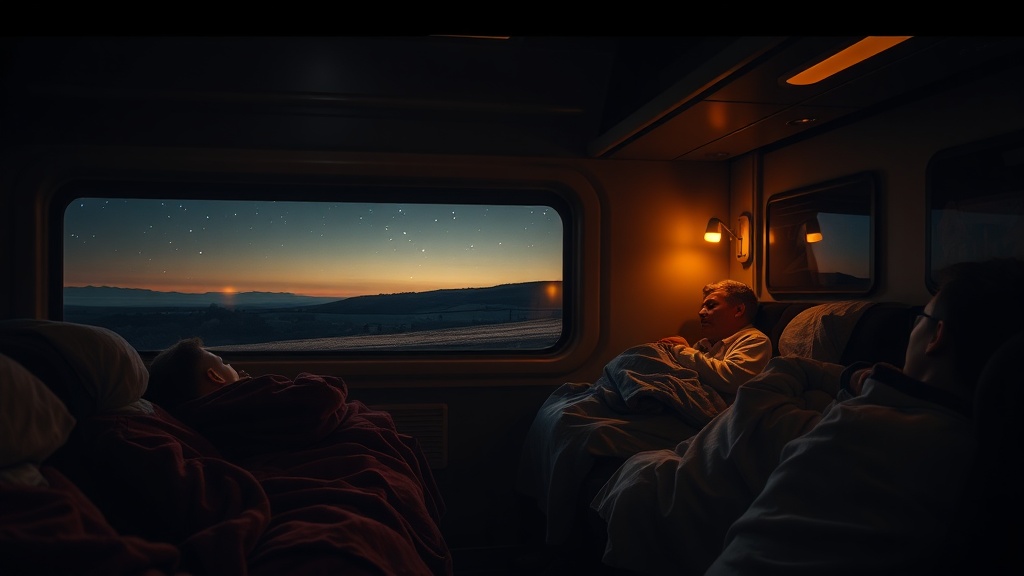
Ever watched a train glide through darkness, the world outside a smear of stars, while the cabin hums with quiet breaths? In 2026, that hushed journey is becoming a quiet revolution for travelers who crave sustainability, story‑rich scenery, and a break from the airport hustle.
Context
Night trains have lingered on the fringe of European travel for decades, but recent subsidy shifts, infrastructure upgrades, and a growing appetite for low‑carbon itineraries are reshaping their fate. For a traveler like me—who prefers listening to the rhythm of a train over the roar of a jet—understanding the new landscape is essential.
What’s Really Driving the Night‑Train Resurgence in 2026?
European governments have begun re‑evaluating subsidies for night services. After the French state pulled funding for the Paris‑Berlin Nightjet in early 2026, a coalition of NGOs and passenger groups rallied for a new funding model that ties subsidies to carbon‑reduction targets. The European Commission’s Sustainable Mobility Package (April 2026) now earmarks €120 million for cross‑border night routes that meet a 30 % emissions‑cut threshold compared to equivalent short‑haul flights (source: European Commission press release).
How Do New Subsidy Rules Change Ticket Prices?
The subsidy framework caps night‑train fares at €0.12 per kilometre for routes under the emissions‑cut target. For the Stockholm‑Berlin overnight service, that translates to a €45‑€55 ticket for a private sleeper, roughly half the price of a comparable flight (source: NightRide timetable article). Budget travelers can now secure a bunk for under €30 on many routes, making night travel financially competitive.
Which Routes Are Still Vulnerable?
Not every line benefits from the new package. The Vienna‑Milan night service faces an impending suspension because construction on the Brenner Base Tunnel delays expected capacity gains (source: Euronews report). Until the tunnel opens, the route’s operating costs exceed the subsidy ceiling, putting it on the chopping block.
How Can I Book a Night Train in 2026?
The booking landscape has simplified. Platforms like Rail Europe and Omio now integrate the EU subsidy flag, automatically displaying the reduced fare. For a step‑by‑step walkthrough, see my earlier guide How to Book European Night Trains in 2026: A Practical Guide.
What’s the Wi‑Fi Situation on Board?
Connectivity remains spotty but improving. The Night Train Wi‑Fi Guide 2026 details which operators have rolled out 4G‑LTE hotspots in sleeper cars (see Night Train Wi‑Fi Guide 2026). In most Western routes, you can expect a reliable signal for email and light browsing, though streaming video still drains bandwidth.
How Does Night‑Train Travel Compare to Budget Airlines?
My recent comparison Night Trains vs Budget Airlines in 2026: Which Wins for Travelers? found that night trains win on three fronts:
- Carbon footprint — up to 80 % lower per passenger‑kilometre.
- Time efficiency — when you factor in airport security and city‑center to city‑center travel, night trains often shave 1‑2 hours off the journey.
- Cultural immersion — the onboard dining car, local music playlists, and chance conversations with fellow sleepers add intangible value.
What Should I Pack for a Comfortable Night‑Train Experience?
- Layered clothing — cabin temperatures swing between 16 °C and 22 °C.
- Noise‑cancelling earbuds — the gentle click of rails is soothing, but a sudden brake can be startling.
- Travel‑size toiletries — most sleeper cars provide a small basin; a quick rinse keeps you fresh for morning arrivals.
- A reusable water bottle — many operators now offer filtered water stations.
Where Can I Find Authentic Local Experiences After Arrival?
Night‑train stations often sit in the heart of the city. In Berlin, the Berlin‑Hauptbahnhof connects directly to the vibrant Kreuzberg nightlife. In Stockholm, the Stockholm Central station opens onto Gamla Stan, where you can wander medieval alleys before sunrise. For a deeper dive, check my 7 Scenic European Train Journeys You Shouldn't Miss in 2026.
Takeaway
Night trains in 2026 are no longer a nostalgic curiosity—they’re a pragmatic, eco‑friendly, and culturally rich way to traverse Europe. With subsidies lowering fares, improved Wi‑Fi, and a clear booking ecosystem, the midnight carriage is ready for you. Pack a blanket, book early, and let the rails carry you into the night.
<meta.faqs>
[
{"question": "How much does a night‑train ticket cost in 2026?", "answer": "Thanks to EU subsidies, most sleeper tickets range from €45‑€55 for private compartments, with budget bunks under €30 on many routes."},
{"question": "Are night‑train routes carbon‑neutral?", "answer": "Routes that meet the EU’s 30 % emissions‑cut target are considered low‑carbon, often delivering up to 80 % less CO₂ per passenger‑kilometre than comparable flights."},
{"question": "Can I work on a night train?", "answer": "Yes — many operators now offer 4G‑LTE Wi‑Fi in sleeper cars, suitable for email and light tasks, though streaming video may be limited."}
]
</meta.faqs>