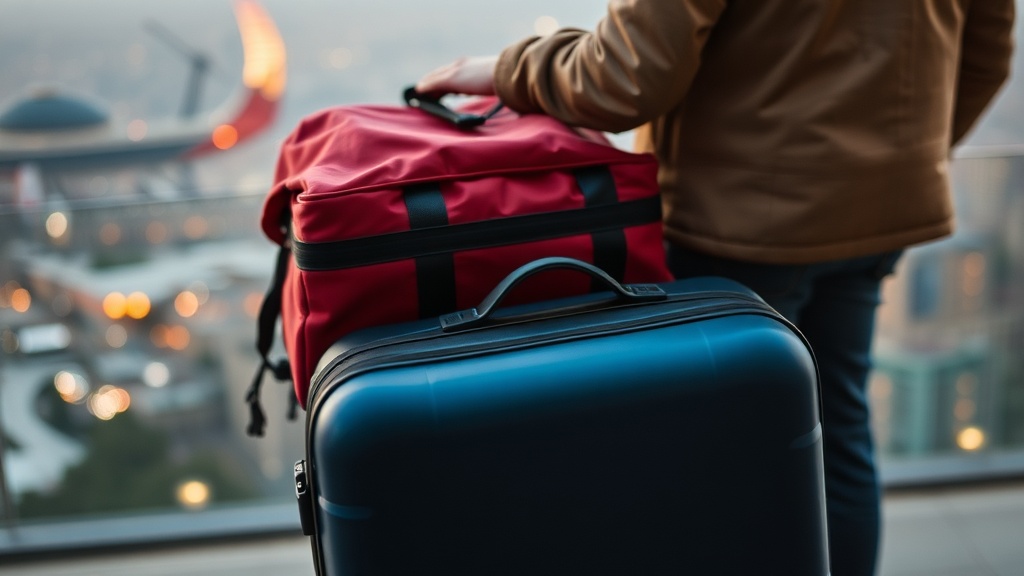
The Art of Packing Light: Travel with Just a Carry-On
Quick Tip
Roll your clothes instead of folding them to save up to 30% more space in your luggage while preventing wrinkles.
Travel Unburdened: The Philosophy of Less
I've watched porters in Kathmandu haul impossible loads up narrow staircases, their bodies bent under weight that defies physics. I've also seen the same men, during their breaks, sit quietly with nothing but a small cloth bag containing tea and bread. The contrast has always stayed with me. The heavy loads were for survival. The small bags were for living.
Carry-on travel isn't about deprivation. It's about mobility—the ability to pivot when a story leads you somewhere unexpected, to accept an invitation to a family dinner without worrying where your suitcase is, to move through cities without the awkward choreography of rolling bags across cobblestones.
The Foundation: Your Bag
Choose a soft-sided bag that fits under airline seats, not just overhead bins. I've used the same 35-liter backpack for eight years across forty countries. Soft bags compress. They forgive. Hard shells demand space you rarely have.
The Clothing Mathematics
Pack for five days regardless of trip length. Wash clothes in hotel sinks or local laundromats—these moments become unexpected windows into daily life. In Hanoi, I learned to fold shirts from a woman running a sidewalk laundry service. In Lisbon, an elderly man taught me his grandmother's method for hand-washing wool.
The formula:
- 2 bottoms (one wearing, one packed)
- 5 tops (mix of short and long sleeve)
- 1 light sweater or fleece
- 1 rain shell
- 5 pairs of underwear and socks
- 1 pair of walking shoes (worn, not packed)
Choose a color palette. Everything must work with everything else. Navy, grey, olive, white. No exceptions.
The Personal Item Strategy
Your personal item carries what you cannot replace: documents, medication, electronics, one change of clothes. If the overhead bin fails and your main bag gets gate-checked, you can survive indefinitely from this smaller bag.
"The best souvenirs don't require luggage space. They change how you see."
What You Actually Need
After documenting displacement camps and remote villages, I've learned that most "essential" items are merely familiar. You don't need your preferred shampoo—local pharmacies stock what works locally. You don't need four pairs of shoes—your feet adapt. You don't need a fresh outfit daily—nobody in your photographs cares what you wore yesterday.
The Weight of Preparedness
Pack one small gift from home. Not for exchange, but for gratitude. A packet of quality coffee beans opened doors in Ethiopia. A handful of maple candies created connections in rural Japan. These weigh nothing but carry significance.
The goal isn't to suffer minimally. It's to remain available—to conversations, to detours, to the unplanned moments that don't appear in guidebooks. Your bag should never arrive before you do.