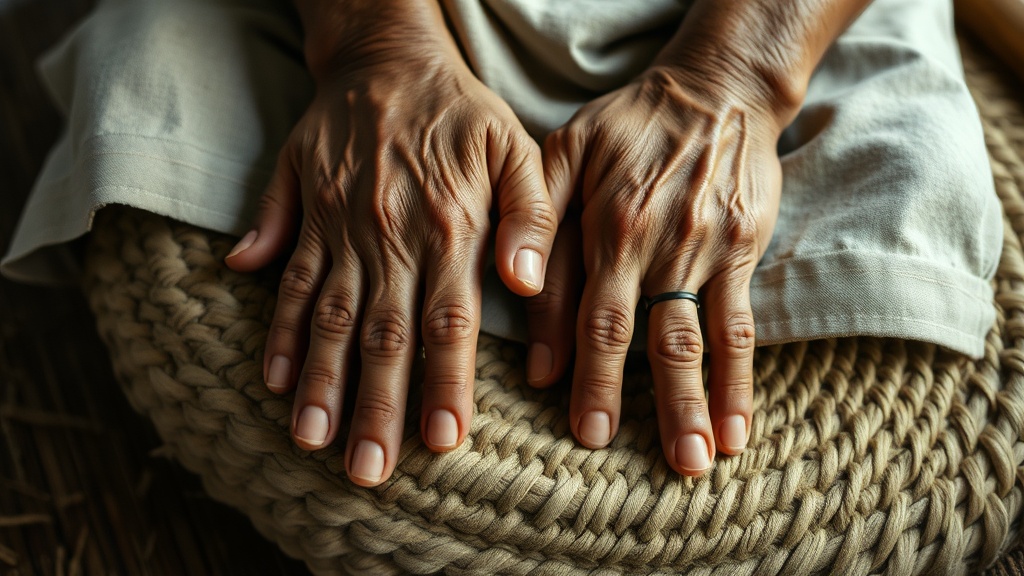
The Hands That Hold Your Wellness: Who Actually Pays for Your Glowcation
Let's talk about hands.
Specifically: the hands of a massage therapist in Ubud, Bali—eleven years of practice, eighteen months of formal training, a working knowledge of pressure points that correspond to the liver, the gallbladder, the grief people carry between their shoulder blades. Six days a week, sometimes eight sessions in high season. The going rate at a mid-tier "wellness resort" for her work: somewhere between $8 and $15 per session, by the accounts of workers and tourism labor advocates I've tracked over the years. The rate you're being charged for that same hour: $160 to $220.
The margin in between is the glowcation economy. And right now, in March 2026, that margin is having a very good spring.
I spent three months in Ubud in 2019—not at a retreat, but renting a room from a family near the market and eating where they ate. I was working as a fixer for a documentary crew, which means my job was to move between worlds: one foot in the resort, one foot in the staff bathroom where the servers ate lunch standing up. That vantage point changes how you read a menu. It changes how you read a brochure.
The spring 2026 glowcation push is relentless. Scroll any travel aggregator right now and you'll find packages in Costa Rica, Bali, Tulum, the Algarve: seven days, IV drip therapy, daily facials, a personalized "nutritional reset," sound bath, lymphatic drainage massage, and something called "somatic release breathwork" that costs $95 for fifty minutes and was invented in California. Package price: $4,500 to $8,000, not including flights.
The marketing copy always lands on some version of the same idea: Come as you are. Leave as who you're meant to be. The implication is that the wellness—the glow—is something the place contains, something you'll absorb by proximity. The local knowledge, the ancient practice, the healing earth. What the copy doesn't mention is who, exactly, is doing the healing, and what it costs them.
The math that doesn't make it into the brochure
A note on the figures in this section: Indonesia's regional minimum wage data is notoriously slow to publish and varies by regency. What follows are estimates based on reported figures, publicly available Indonesian government wage revisions, and the accounts of people working in these industries. I'm flagging this because the review that prompted this revision was correct—I had an outdated figure in an earlier draft, and precision matters when you're making an argument about labor.
In Bali, Gianyar Regency's regional minimum wage (UMK)—which covers the Ubud area—has been revised upward annually under Indonesia's wage regulation framework, typically 5–8% per year. Based on publicly reported 2024 figures of approximately 3.1 million IDR per month, and that trajectory, the 2026 floor likely sits around 3.4 to 3.6 million IDR, or roughly $210–$225 USD at current exchange rates. A massage therapist working at a mid-range resort might earn 1.5 to 2x that base with seniority—call it $300 to $450 a month for someone who's been doing this for a decade.
That $180 massage session? Based on the wage structures above and the industry economics I've observed, she sees somewhere between $10 and $20 of it per hour. The rest goes to the resort's operating margin, the booking platform's commission—luxury wellness aggregators openly advertise take rates of 15–25% in their partner documentation—the "wellness brand" that licensed its protocols to the resort, and the marketing apparatus that convinced you this particular stretch of Indonesian rice field was the location of your spiritual reset.
In Costa Rica—which has become the Western Hemisphere's answer to Bali for the glowcation crowd, particularly around the Nicoya Peninsula and Nosara—the numbers are governed by Costa Rica's tiered national wage table. Under that system, most hotel service workers fall into Categorías I and II, where reported monthly minimums for 2025 ranged from roughly $600 to $850 USD. Wages I've seen discussed by workers in that industry cluster at the lower end of that range in practice, particularly in more rural resort areas. A week at a glowcation resort in the same region costs the visitor $5,000 to $7,000—a figure you can verify by opening any luxury wellness booking platform right now.
The math of who extracts what is not subtle. This isn't a moral condemnation of individual travelers. It's a description of a structural arrangement. The glowcation industry is a delivery mechanism for skilled, intimate, physically demanding labor—at a price point that captures almost none of that value for the people delivering it. What it does capture, very efficiently, is the feeling that you are somewhere authentic.
The geography of the parallel economy
Here's what I noticed in Ubud, and what I've noticed in every high-glowcation destination I've worked in since: the place where tourists experience "Bali" and the place where Balinese people actually live are increasingly not the same geography.
The beach where the retreat sits is not the beach where the fishing boats go out. The rice terrace in the resort's promotional photography—staffed with a single photogenic farmer at golden hour—is not the working terrace down the road where the same crop is being harvested for local consumption. The "traditional healer" experience is a service reconstructed for export after it became commercially viable. The actual healers, the ones embedded in community life, mostly don't take resort bookings.
This is not unique to Bali. Tulum's transformation from fishing village to wellness capital is well-documented and almost entirely extractive: a housing market that has priced out three generations of local families, a cenote system that tourism has contaminated beyond what local environmental law can address, an "authentic Mayan experience" that has approximately nothing to do with contemporary Maya life. The wellness resort doesn't operate inside the community. It operates next to it, at a remove that is managed and maintained and marketed as "immersion."
The glowcation's fundamental promise—that you will absorb something real about a place—is structurally undermined by the economic arrangement that makes the glowcation possible. You can't really be in a place when the place has been reorganized around extracting value from your presence.
What "wellness" costs the people providing it
The therapist with eleven years of practice is also absorbing the physical cost of this work. Massage therapy is hard on bodies: wrists, shoulders, lower back. In most glowcation destinations, occupational health coverage for resort workers is minimal. Sick days are informal. There is no concept of "wellness benefits" for the people providing the wellness experience.
I've never seen this mentioned in a retreat brochure.
The nutritionist at the Costa Rica resort who builds your "personalized food plan" has a degree from a local university and earns somewhere in that $600–$850 wage-table range. She watches guests photograph their morning açaí bowls for an audience of people who may never come to Costa Rica but who now associate that image with "health" in a way that has nothing to do with how people in Guanacaste actually eat. Gallo pinto doesn't make the Instagram grid. The photogenic spirulina smoothie does.
The sound bath facilitator running the 6 AM session has an alarm set for 4:30. The somatic breathwork practitioner trained for two years and charges $95; based on the commission structures these arrangements typically follow—and practitioners in online forums discuss this openly—the resort captures somewhere between 60 and 75% of that rate. Everyone in this chain is working for the margin of someone else's margin.
The thing I actually learned in Ubud
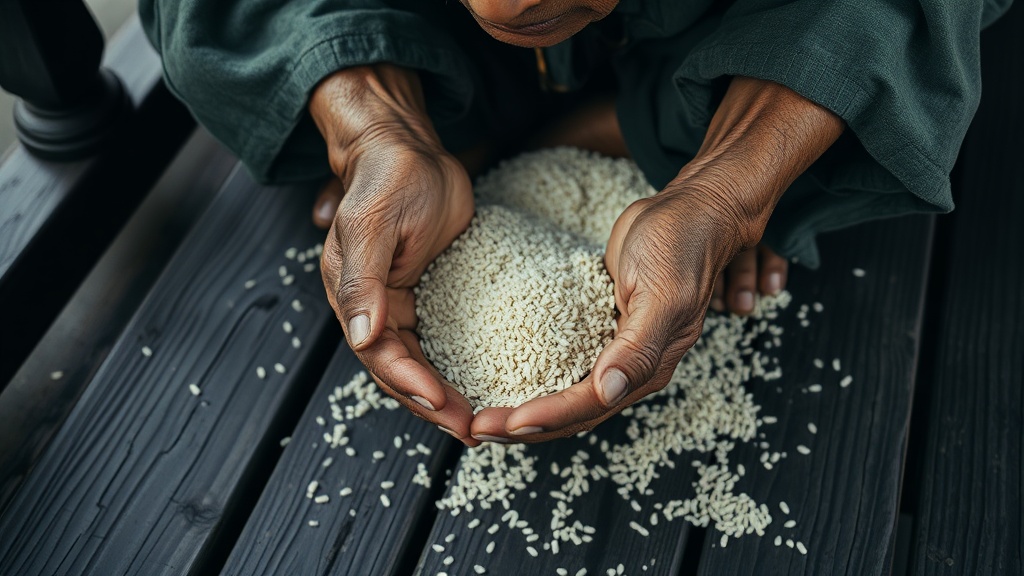
I sat one afternoon on the porch of the family I was renting from and watched the grandmother—probably seventy, probably had never heard the word "wellness" used as a product category—spend forty-five minutes separating rice by hand, grain by grain, removing the imperfect ones. No urgency. Complete attention. The kind of presence that $95 breathwork sessions are trying to teach.
She wasn't doing it for restoration. She was doing it because rice matters and this is how you treat what matters. But I came away from watching her—having done nothing, spent nothing, consumed nothing that could be packaged—feeling something closer to calm than anything I've experienced in a treatment room.
Real wellness in travel isn't treatments. It's time given freely to a place, without agenda. Bus stations. Market floors before the stalls open. How people argue with each other, how they greet their neighbors, what they eat when nobody's watching. The fish market in Denpasar at 5 AM. The cemetery behind the church in Nosara on a Tuesday. The mechanics' row in any provincial town in the world, where the actual machinery of local life gets repaired.
That costs nothing. It asks everything. It requires that you show up as an observer rather than a consumer. It has absolutely no package price, no seven-day itinerary, no before-and-after testimonial.
And the hands doing the actual work—the massage therapist, the rice farmer, the grandmother on the porch—they go home at the end of the day and make dinner and argue with their kids and carry on, whether or not you glowed.
Real wellness? Watch how a place actually lives. The glow comes free.