The Last Pull of the Cord: On the Dismantling of Kolkata's Trams

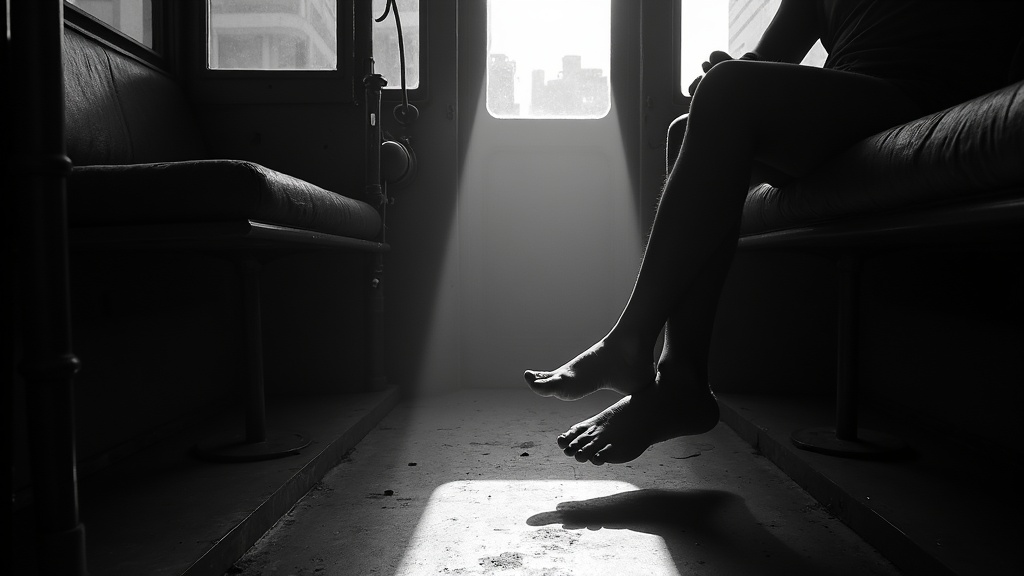
The floor of Tram No. 620 vibrates at a frequency that bones remember even after sleep. It is a low, steady hum—somewhere between the pitch of a distant generator and the sound a teakettle makes before boiling. In Kolkata, where the humidity wraps the city like wet wool, veteran drivers do not wear shoes. The locals call this paa chere chala—walking with the feet released. On the tram, it means feeling the rails through the metal deck: the moment a switch approaches, the warning of a rough patch of track, the subtle deceleration before a station. The body knows before the eye sees.
We boarded at Esplanade, where the trams have stopped and started since 1873. The year is significant only because the newspapers keep mentioning it—150 years, 151 years—as if anniversary cake could slow the dismantling. The West Bengal Transport Corporation has announced "rationalization." The rest of us call it erasure. Last week, they cut the route to BBD Bag. The week before, Belgachia. The tracks remain, gleaming in sudden uselessness, but the wires overhead are already being harvested for scrap.
Behind the partition, the conductor sits on a wooden slat bench painted institutional green. His name is Ganesh Tiwari, or perhaps it was the week before—there are many conductors, and they work in shifts that outlast memory. He has worked this line for 38 years, or his father did, or his father's father. The genealogy blurs because the work is the same. The bell cord hangs overhead, a braided rope ending in a wooden handle worn smooth by palms. The conductor does not shout to the driver. The partition is too thick, the engine too loud. Instead, he pulls once for stop, twice for start, three times for emergency. The code has not changed in a century and a half.
I asked him how it feels, this dismantling.
He did not answer directly. Instead, he gestured to his feet—bare, calloused, the toes spread wide from decades of gripping vibrating metal. "The floor tells you," he said, in Hindi that I barely followed, aided by a passenger who translated. "When the track is good, she purrs. When she is angry, you feel it in the ankles." The tram has personality. The tram has moods. The tram, in his cosmology, is not a machine but a presence.
This is what is being lost. Not merely a mode of transport—Kolkata has buses now, and a metro, and ride-share apps that calculate routes in milliseconds. What is being lost is a way of knowing the city through the body. The driver who can feel a faulty weld through the soles of his feet. The conductor who knows by the angle of afternoon light whether they will reach Gariahat by the market's closing. The passenger who recognizes their stop not by the announcement—there are no announcements—but by the particular rhythm of the wheels over the points at Park Street.
The locals call the tram shong, a word that exists nowhere else in Bengali. It is not a shortened form of anything. It is simply the sound the tram makes when starting: shong-shong-shong, the electric whine rising in pitch. Children who have never ridden still know this word. It is nursery rhyme material, a sound-verb, a piece of onomatopoeic infrastructure.
In the cab, the driver works both hands constantly. The left pulls the power lever, feeding current to the motors. The right hovers over the vacuum brake handle, ready. There is no power steering. The tram weighs 22 tons. The turns require shoulder muscles built over years, or inherited—many drivers are third-generation, their bodies shaped by the same repetitive torque. The steering wheel is wood, cracked, wrapped in cloth tape that has been replaced so many times no one remembers the original color.
I asked if I could photograph the cab. The driver—whose name I did not catch, who wore a checked lungi and a singlet stained with sweat—shook his head. Not yet, the gesture said. Not until we talk more. This is the protocol I have learned to respect: the camera is a privilege, not a right. We rode in silence for three more stops. At Rashbehari Avenue, he finally nodded.
The photograph I took shows his left hand on the power lever, the right on the brake. Between them, through the windshield, Calcutta blurs past in the particular way it does from moving trams—not smeared like from a fast car, but stuttering, frame by frame, as if the city is being projected from an old celluloid reel. His feet are bare, planted wide, feeling the rails through the floor.
There is a word in Bengali—bhanga—that means both "broken" and "to break." The tram is bhanga. The city is bhanga. The relationship between them, too, is bhanga, cracking along lines that were invisible until suddenly they were not. The tracks will remain for years, I am told, embedded in the asphalt like the fossils of some extinct species. Children will ask what they are. Parents will answer with stories that sound like mythology.
The last tram on this line will run without ceremony. No final bell. No commemorative ride. The driver will park at the depot, pull the power, and step onto the platform. His feet will find solid, non-vibrating ground. He will walk home. The next morning, a bus will take the route, air-conditioned, with GPS and recorded announcements. It will not shudder. It will not require bare feet to feel its health. It will be efficient, rational, modern.
It will not remember.
The conductor pulled the cord—once, sharp. The bell rang overhead, a sound like a question. We slowed for Gariahat, and I watched Tiwari, or whoever he was, coil the rope back into stillness. His hands knew the exact length. His body knew the schedule, even if the schedule no longer mattered. We were, all of us in that vibrating compartment, participating in a ritual whose meaning had shifted. It was no longer transport. It was witness.
The tram remembers for us, until we let it stop.
Stay curious, stay humble.