The Leather That Remembers: On Craft, Visibility, and the Tanneries of Fez
The smell arrives before you see the vats. It is the smell of centuries fermenting—pigeon dung and lime, oak bark and urine, a chemistry that has not changed in six hundred years. You are standing at the edge of the Chouara tannery in Fez, and the air is so thick with it that you can taste the mineral tang on your teeth.
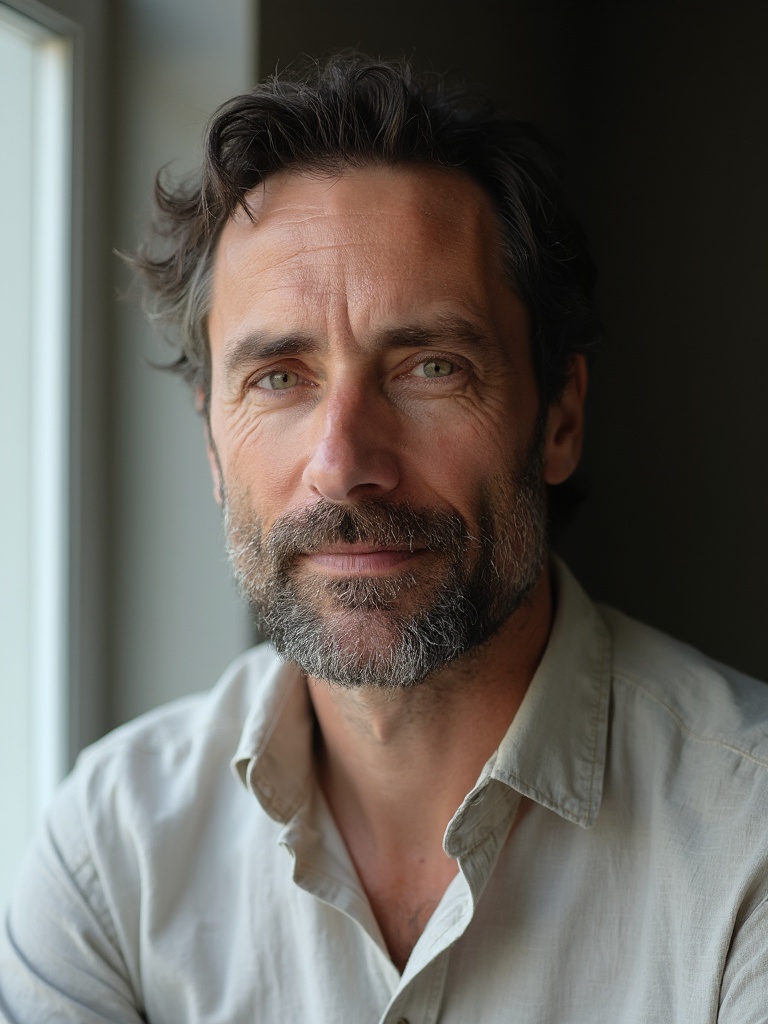
Hassan is fifty-three. He has been in these vats since he was nine—first as a boy watching his father, then as an apprentice learning to read the color of the leather by the way the light moves through the dye, then as a master who knows, by touch alone, when a hide has had enough.
"The leather remembers," he says, running his palm across a piece of vegetable-tanned goat skin. "If you rush it, the leather knows. It will crack in five years. If you respect the time, it will last a lifetime."
This is not poetry. This is physics applied to patience.
The Paradox of Visibility
For five hundred years, the Fez tanneries were invisible to the world. They were a necessity, not a commodity. Leather was made here because animals were slaughtered here, and the hides could not be wasted. The process was brutal, the work was low-status, and the neighborhood smelled like death.
Then, around 2010, something shifted. Travel bloggers discovered the tanneries. Instagram was born. The "authentic experience" became currency. Suddenly, the Chouara tannery was not just a workplace—it was a destination. Tour groups arrived at 9 AM, paid five euros for a "photo permit," and left by noon with a story about "ancient craftsmanship."
Hassan watched this happen. He watched his workspace become a museum. He watched tourists hold their noses and take selfies with the vats in the background. He watched the price of a leather jacket jump from $40 to $120 because it was "hand-tanned in Fez."
And he watched his son refuse to enter the vats.
"My son is twenty-five," Hassan tells me, and there is no bitterness in his voice—only the weight of a decision he understands. "He sees the tourists. He sees the smell. He sees that his father's hands are stained and cracked. He sees that a degree in business pays better. He chooses the degree."
This is the paradox: visibility has made the craft more valuable and less viable at the same time.
The Economics of Authenticity
The tannery is not a museum. It is a business. And like all businesses, it is subject to the laws of supply and demand.
In 2015, a luxury brand from Milan approached Hassan. They wanted to source "authentic Fez leather" for a limited collection. They would pay premium prices—$80 per hide instead of the market rate of $35. All Hassan had to do was certify that his leather was "traditional" and "hand-tanned."
He did. The collection sold out. Vogue ran a feature. The brand came back for more.
But there was a problem. To meet the volume, Hassan had to hire more workers. The vats could only process so much leather per month. To increase output without expanding the tannery (which would cost money he didn't have), he had to speed up the process. He cut the fermentation time from six months to four. He reduced the number of dye baths from twelve to eight.
The leather still looked the same. The brand still paid premium prices. The tourists still came.
But Hassan knew. The leather would not last a lifetime anymore. It would last five years. Maybe seven.
"I am a liar now," he says, not looking at me. "I sell leather that I would not give to my own family. But I have a family to feed. So I lie."
This is not Hassan's failure. This is the failure of a system that assigns value based on the story of a product rather than the integrity of its making.
The Cost of Discovery
The real damage came later. Around 2018, as Instagram tourism accelerated, a new kind of visitor arrived: the "ethical consumer." These travelers wanted to "support local artisans" and "preserve traditional crafts." They would pay $200 for a leather journal, convinced that their money was going directly to Hassan and his family.
It wasn't. The leather was being resold through middlemen, marked up 300%, and sold in tourist shops as "authentic Fez leather." Hassan was still getting $35 per hide. The middleman was getting the premium.
Worse, the demand for "authentic" leather attracted industrial operators. Factories opened on the outskirts of Fez, using chemical tanning (faster, cheaper, toxic) and selling their product as "traditional." They undercut Hassan's prices. They had no apprentices to train. They had no history to preserve. They just had speed and volume.
The tannery that had survived six hundred years was now competing with a two-year-old factory that had no intention of lasting.
"The tourists think they are saving us," Hassan says. "But they are killing us slowly. They want the story more than the leather. So the story becomes more valuable than the craft. And when the story becomes more valuable, the craft disappears."
The Weight of Apprenticeship
I ask Hassan if he is training anyone. If there is an apprentice learning the vats, the colors, the weight of patience that cannot be rushed.
He pauses. "There was one. A boy from the neighborhood. Fourteen years old. He came for three months. He learned the fermentation process, the first dye bath, how to read the leather by touch. He was good. He had the hands for it."
"What happened?"
"His mother took him out. She said: 'You can learn to code. You can work in a call center. You do not have to smell like this.' She was right. I did not argue with her."
The vats have not had a new apprentice in eight years.
This is the real crisis. Not the tourists, not the factories, not even the Instagram economy. It is the moment when a parent looks at their child and decides that the craft is not worth the cost. That decision is rational. It is also the moment when a lineage breaks.
The Question We Don't Ask
I have spent four hours with Hassan. I have photographed the vats (only after asking, and only after he invited me). I have learned the names of the dyes: indigo, pomegranate, mint. I have watched him move through the work with the efficiency of someone who has done the same motion ten thousand times.
And I am aware, acutely, of my presence here. I am a Western observer with a notebook. I am documenting his labor. I am about to publish this story. And in publishing it, I am adding to the visibility that is both saving and destroying his craft.
So I ask him directly: "Does it help you when people write about this place? When they tell the story?"
Hassan looks at me for a long time. "The story helps the tourists. The story helps the writers. The story helps the brands. The story does not help me. The story helps everyone except the people who are actually making the leather."
He pauses. "But I understand why you are here. I understand why you want to write this. You want to make people care. That is good. But caring is not the same as buying. And buying is not the same as paying fairly. And paying fairly is not the same as training the next generation. You understand?"
I understand.
The Leather That Remembers
Before I leave, Hassan gives me a piece of leather. It is a small square of goat skin, vegetable-tanned, dyed with indigo from the vats I have watched. He has written on it, in Arabic: "The leather remembers."
"This one is real," he says. "This one I took six months to make. This one will last. When it cracks—and it will crack, because leather ages—the cracks will be beautiful. They will be the map of how it was used. That is what real leather does. It becomes more beautiful as it breaks."
I am holding six hundred years of labor in my hands. I am also holding the weight of a question I cannot answer: How do we preserve a craft without destroying it? How do we honor the maker without turning the making into a performance? How do we care in a way that actually helps?
Hassan does not have the answer. Neither do I. But I know this: the tanneries of Fez are still here. Hassan is still in the vats. The leather still remembers. And somewhere in the city, a boy who almost became an apprentice is learning to code instead—which is the rational choice, and also the loss.
The craft will survive. It will just survive differently. It will be made by fewer hands. It will be more expensive. It will be more "authentic" because there is less of it. And the story of its preservation will be told by people like me, who are not the ones actually making the leather.
That is the paradox of visibility. That is the cost of caring.
Stay curious, stay humble.