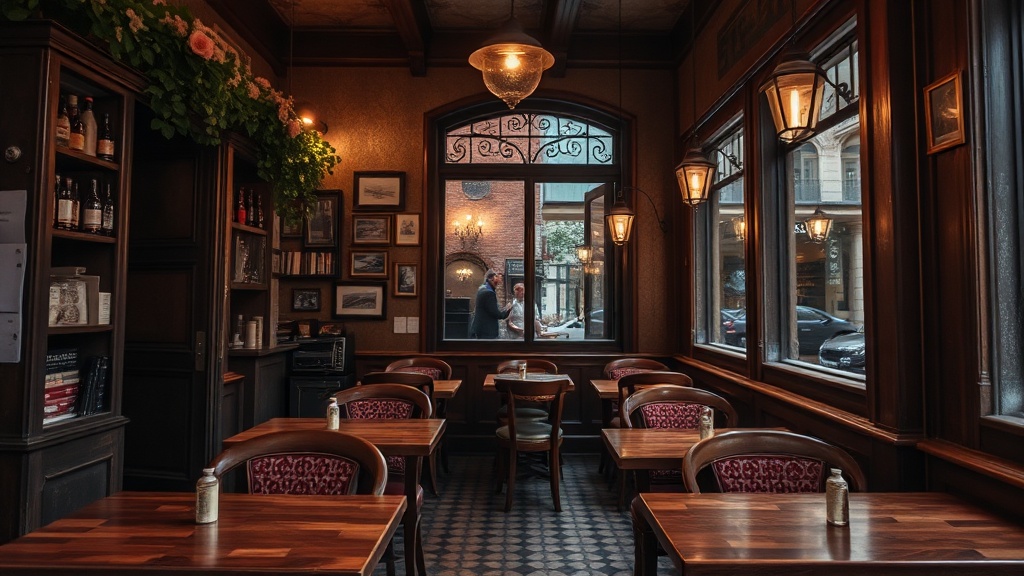
The Quiet Persistence of Traditional Coffee Houses in Central Europe

This post examines the enduring presence of the traditional coffee house culture in cities like Vienna and Budapest, focusing on how these spaces maintain their identity despite modern rapid shifts. You'll see how the ritual of the slow afternoon coffee serves as a stabilizer for local communities and why these institutions remain relevant today.
What makes the Viennese coffee house culture so significant?
It isn't just about the caffeine; it's about the ownership of space. In a traditional Viennese Kaffeehaus, you aren't just a customer—you're a temporary resident. The unspoken rule is that you can sit for three hours with a single cup of Melange, and no one will ever ask you to leave. This creates a sense of permanence in a world that usually demands we move along.
The architecture itself plays a role. Heavy velvet curtains, dark wood-paneled walls, and marble tabletops aren't just aesthetic choices; they are designed to muffle the outside world. When I sat in a small corner near the Stephansplatz, watching a man read a physical newspaper for nearly an hour, I realized that these spaces act as living rooms for the solitary. They offer a dignified way to be alone in public. The service is often brisk, almost detached, which provides a certain level of privacy that a friendly, overly attentive barista might disrupt.
- The Ritual of the Tray: A small glass of water served alongside your coffee is a standard, signaling that the drink is meant to be savored, not rushed.
- The Newspaper Shelf: Even in the digital age, the presence of physical papers remains a staple of the environment.
- The Soundscape: The clink of heavy porcelain on marble is a consistent, calming rhythm that defines the atmosphere.
Where can you find the best traditional coffee experiences?
While many tourists head straight for the most famous names, the real soul of the culture lives in the smaller, neighborhood-focused establishments. In Vienna, look for places that don't feel the need to modernize their menus with avocado toast or matcha lattes. The same applies to the Budapest coffee scene, where the history of the Austro-Hungarian Empire still lingers in the ornate ceilings of the grand cafes.
If you want to see this in action, look for the following markers of authenticity:
- Lack of Wi-Fi prominence: While many places do offer it now, the traditional spots don't advertise it. If the focus is on the menu and the decor rather than the connection speed, you've found a good one.
- Traditional Menu Items: Look for classics like Sachertorte or Apfelstrudel. These aren't just desserts; they are the reason these shops exist.
- The "Old Man" Factor: If you see local regulars—older gentlemen or students—settled in for long stretches, the establishment is doing its job right.
The Vienna Tourism website offers a wealth of information on the history of these establishments, which helps in understanding the weight of the tradition. When you walk through these doors, you aren't just entering a cafe; you're stepping into a social institution that has survived wars, empires, and the rise of the fast-food era.
How does coffee culture impact local social life?
The coffee house is a social equalizer. It's a place where the boundaries between private and public life blur. In many European cities, the coffee house serves as a third space—a place that is neither home nor work, but a neutral ground for thought and conversation. This is vital for the mental welloche of the urban population. It provides a structured way to engage with the city without the pressure of active social interaction.
I've spent many afternoons simply watching. I watched a woman sketch in a notebook for two hours, undisturbed by the bustle of the street outside. I watched two old friends argue over a game of chess, their voices low and rhythmic. This isn't a place for "grabbing a coffee on the go." It's a place for being. This slow pace acts as a counterbalance to the frantic energy of modern urban life. It's a reminder that there is value in the pause.
For those interested in the broader cultural implications of European cafe culture, the UNESCO World Heritage descriptions often touch upon the cultural landscapes that these institutions help preserve. It's a small piece of a much larger, much older puzzle of how humans occupy space and build community through shared-but-solitary rituals.
The beauty lies in the details: the way the steam rises from a heavy ceramic cup, the weight of the silver spoon, and the predictable, comforting cadence of the afternoon. It's a culture of presence. Even as the world speeds up, these places stand still, offering a quiet, persistent way to exist in the moment.