The Weight of Repetition: On Watching a Weaver in Oaxaca
The smell of raw wool and wood smoke—that is the morning breath of Teotitlán del Valle. It hangs in the air before the sun clears the Sierra Norte, clinging to the adobe walls and the shallow riverbed that has fed this village since before the Spanish arrived with their looms.
I found Doña Rosa at her pedal loom, as she has been found every morning for sixty-three years. The locals call her work tapete, but to the families who have commissioned her rugs for three generations, it is simply "memory made physical." The Zapotec word for this is guendaliza—a term that means both "to weave" and "to speak," because in this village, the loom is the only language that has never been conquered.
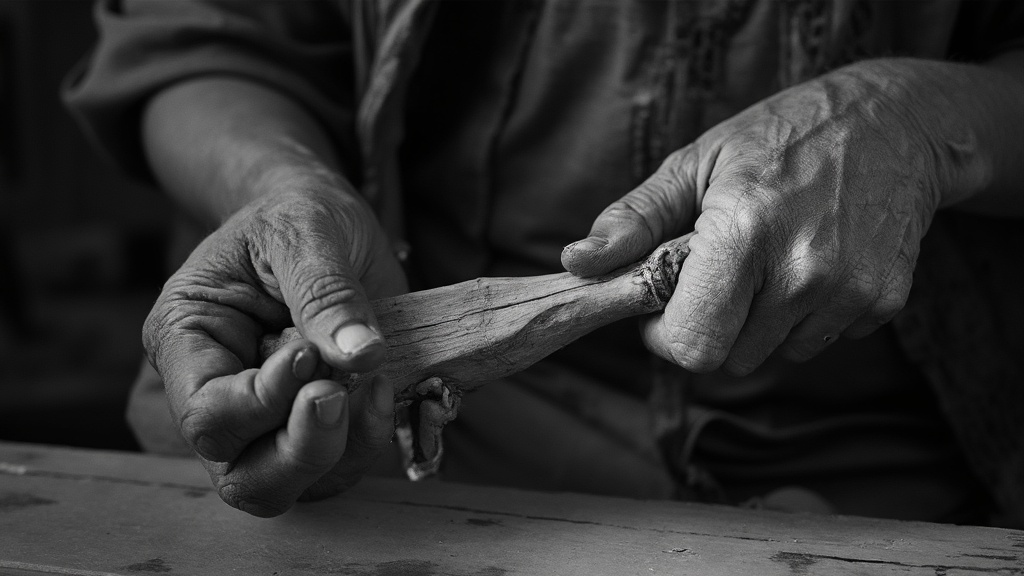
We sat for an hour before I asked permission to document. This is the rule I have carried since my mother taught me: the camera is a privilege, not a right. Ten minutes of conversation became twenty. She spoke of her grandfather, who dyed wool with the cochineal insect before chemical pigments arrived. She showed me the calluses on her palms—"my inheritance," she called them, laughing—and the way her fingers move independently of her mind, knowing patterns her eyes no longer see clearly.
The loom itself is a biography. The wooden frame was built by her husband's father. A particular squeak in the left pedal marks where her mother's heel pressed for forty years. The shuttle, smooth as river stone, carries wool she carded herself from sheep she can no longer keep.
"People want to know how long it takes," she said, not looking up from the rhythm of warp and weft. "They want a number. Hours. Days. But time is not the cost. The cost is the forgetting. Every pattern I weave is a vocabulary. If I stop, the words die."
She was weaving a rug commissioned by a museum in Mexico City. The design was traditional—lightning bolts and agave, the symbols of rain and fermentation—but the colors were new, synthetic, bright. "They want the old ways in new colors," she said. "I give them what they need to remember us."
I thought about the ethics of my gaze. I am a visitor with a camera, a foreigner with a notebook, sitting in her workspace while she labors. My presence changes the room. The light falls differently when someone is watching. I offered to leave. She refused. "You are writing," she said. "Writing is also a loom. You pull threads from the air and make them stay."
The weight of repetition: this is what I want to leave you with. Not the romance of the artisan, not the fetishization of the handmade, but the brutal, beautiful truth of showing up to the same wooden frame every morning for six decades. The body learns. The hands remember. The work outlives the worker.
Before I left, I bought nothing. I had no wall large enough for her rugs, no museum to house her biography. Instead, I commissioned a small piece—six inches square—woven from the leftover wool of three generations of commissions. It hangs in my apartment in Montreal now, above my desk. Visitors ask about it. I tell them about the smell of wool and wood smoke. I tell them about the squeak in the left pedal. I tell them that guendaliza means "to weave" and "to speak," and that some languages only exist in the movement of hands.
Stay curious, stay humble.