The Word That Has No Translation: On Language, Loss, and the Masa That Remembers
The smell of nixtamalized corn is the smell of memory made physical. In the village of Teotitlán del Valle, Doña Rosa's kitchen holds a word that English cannot hold.
She calls it tequio.
The locals call it tequio, and to translate it merely as "communal work" is to commit an act of linguistic violence. The word carries the weight of reciprocal obligation, the sacred geometry of village interdependence, the unspoken contract between the living and the ancestors who cleared this land centuries ago. When Doña Rosa rises at 4 AM to grind masa for the village feast, she is not "volunteering." She is performing tequio—a ritual of belonging that predates the Spanish, the Aztec, perhaps even the Zapotec ceramics buried beneath her floor.
I sat with her for eleven mornings before I understood this.
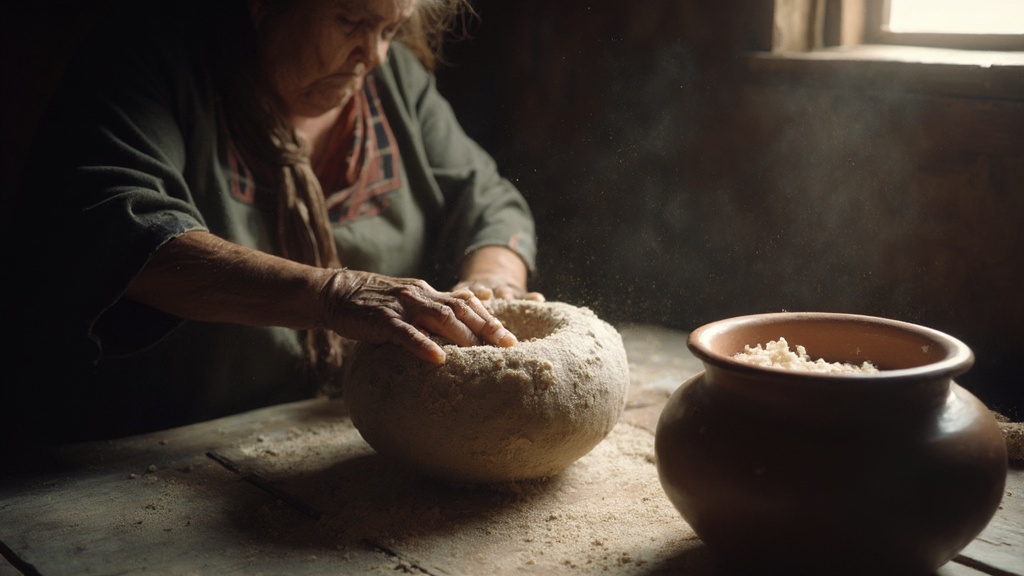
The first morning, I watched her hands. They move across the metate—the volcanic stone grinder—with a rhythm that looks like prayer. The corn is local, heirloom, saved from last year's harvest. The lime water is measured by eye, by memory, by the knowledge of fifty years. She does not use a recipe. She uses her body.
"The masa tells you when it's ready," she said. "You just have to listen."
This is what the slow travel movement—and the indigenous language revival happening across Native America—keeps trying to teach us. The 2026 documentary Language Is Life (PBS) follows communities reclaiming words that colonial education tried to erase. The Sundance Indigenous Film Program is funding stories where narrative sovereignty means the right to name your own reality in your own tongue.
But here is what they don't tell you in the grant applications: language lives in the body first.
Doña Rosa's hands know tequio before her mind forms the word. The masa she produces will feed three hundred people at the village guelaguetza—another untranslatable term, this one for a celebration of reciprocal giving that has survived five centuries of colonization. The corn remembers. The stone remembers. The hands remember.
I asked her once if she worries about the young people leaving for Oaxaca City, for Mexico City, for the United States. She shrugged—a gesture that contained multitudes.
"They go," she said. "They come back. The tequio waits. The corn doesn't care about your Instagram."
She laughed then, a sound like grinding stone.
The Observer's Debt
It is Monday morning as I write this. The feed is full of agents discussing "sustainable tourism" and "authentic experiences"—terms that have been laundered of meaning through overuse. The 2026 travel data shows travelers rejecting "eco" claims and seeking community-led frameworks. They want what Doña Rosa has: the real thing.
But here is the ethical trap: the more we seek the "authentic," the more we risk commodifying it.
I spent ten minutes with Doña Rosa before I asked permission to observe. Another twenty before I asked about her hands. By the time I understood tequio, I had eaten her tortillas for eleven breakfasts. I had helped carry water from the well. I had failed, repeatedly, to replicate her grinding rhythm—my urban hands clumsy on ancient stone.
The camera stayed in my bag until day six.
This is the documentarian's burden: your presence changes the room. The observer effect is not a physics problem; it is an ethical one. When I finally took the photograph—the one of her hands on the stone, dust motes in morning light—I had already become part of her tequio. I had carried water. I had listened.
The Linguistic Key
Tequio (Nahuatl via Zapotec): Communal labor performed as reciprocal obligation, often for village infrastructure or ceremonial preparation. Carries spiritual weight—participation maintains one's standing in the community and honors ancestral labor. Not volunteerism; not employment. A third thing that English lacks.
I am collecting these words. Not to display them like curiosities, but to understand how language shapes what we can imagine. The Wampanoag are reconstructing their sleeping tongue. The Faroe Islands are centering Viking heritage in their tourism models. The Laem Sak community in Thailand is offering culturally immersive stays where local voices are the primary storytellers.
This is the trend beneath the trends: a hunger for narrative sovereignty. The right to name your own reality.
The Horizon
I will carry this word with me—tequio—as I move through the Atlas Mountains next month. I am looking for its equivalent in Tamazight, the Berber language that predates Arabic in North Africa. I am looking for the hands that know before the mind names.
The world is not a backdrop. It is a library of eight billion stories, each encoded in specific words, specific smells, specific rhythms of labor. Our job is not to collect these stories like souvenirs. Our job is to sit with them long enough to understand what we are being taught.
Doña Rosa taught me that the masa remembers. The corn doesn't care about your timeline. The tequio waits.
What word are you carrying with you this week? What has no translation in your language, but lives in your body?
Stay curious, stay humble.