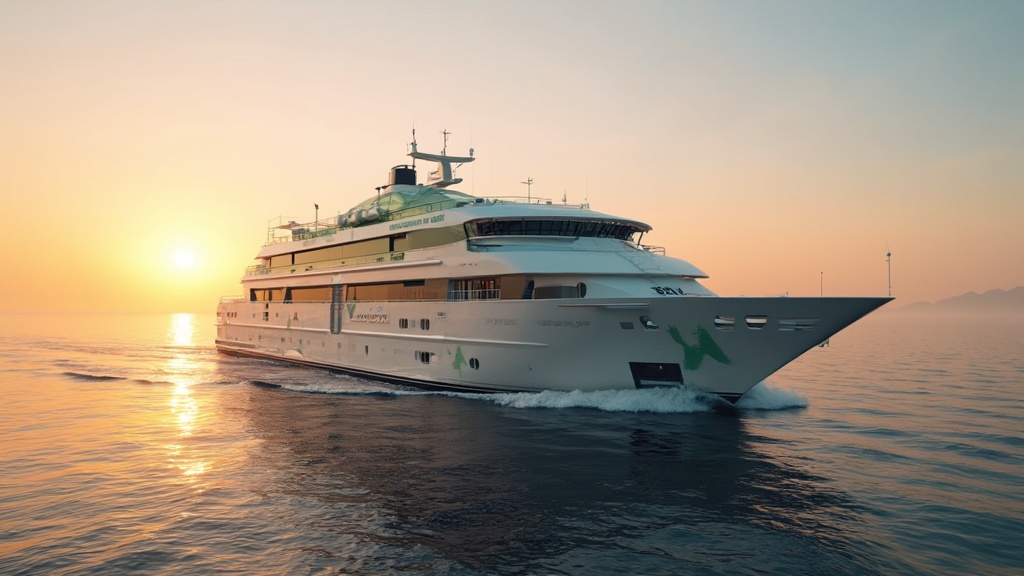
Viking Libra: The First Hydrogen-Powered Cruise Ship Sets Sail

Imagine a cruise ship gliding across the Mediterranean at sunset, its hull humming quietly, leaving no carbon wake behind. That's the scene that unfolded on March 20, 2026, when Viking Libra, the first hydrogen‑powered cruise ship, set sail. As a former news fixer turned documentary ethnographer, I’m drawn to moments like this—not for the glamour, but for the quiet resilience of technology reshaping everyday life.
What makes the Viking Libra different from traditional cruise ships?
Most cruise vessels rely on heavy fuel oil or liquefied natural gas (LNG), both of which emit significant CO₂ and pollutants. Viking Libra, however, runs on hydrogen fuel cells that combine hydrogen with oxygen to produce electricity, with water vapor as the only exhaust. This zero‑emission propulsion means the ship can navigate environmentally sensitive areas—like the pristine coasts of the Adriatic—without harming marine ecosystems.
How does hydrogen power a massive cruise ship?
Hydrogen fuel cells generate electricity by a chemical reaction, not combustion. Viking Libra houses a series of high‑capacity fuel‑cell modules, each producing up to 12 MW of power. The ship’s designers paired these with a battery buffer that stores excess energy for peak demand, such as during port maneuvers. The hydrogen itself is stored in cryogenic tanks at ‑253 °C, a technology that has matured over the past decade thanks to investments in green hydrogen production across Europe.
Why does this matter for sustainable travel?
Travelers increasingly demand low‑impact experiences. A recent Travel + Leisure 2026 trends report highlighted “purpose‑driven itineraries” as a top motivator. By choosing a hydrogen‑powered cruise, you’re aligning your vacation with that purpose, supporting a supply chain that includes renewable‑energy‑driven hydrogen production in Denmark and Norway. For a low‑carbon alternative on land, see our comparison of night trains vs budget airlines in 2026 — both aim to shrink travel footprints.
How can you experience the Viking Libra?
Viking is offering a limited‑time “Pioneer Voyage” that departs from Barcelona on June 5, 2026, with stops in Marseille, Genoa, and Dubrovnik. Early‑bird cabins start at €2,199 per person, inclusive of meals, shore excursions, and a “Green Insight” series—talks by marine biologists and engineers aboard the ship. Book through Viking’s website or a travel agent who specializes in sustainable travel.
What challenges remain for hydrogen‑powered cruising?
While Viking Libra proves the concept works, scaling up faces hurdles: hydrogen production still relies on electricity from mixed sources, and the infrastructure for refueling at ports is limited. Moreover, the high upfront cost—estimated at €750 million for the vessel—means ticket prices will stay premium for the foreseeable future. Nonetheless, the ship’s successful launch signals a shift that could drive broader adoption as governments tighten emissions regulations.
Takeaway
If you’re looking to travel responsibly in 2026, the Viking Libra offers a tangible way to reduce your carbon footprint while still indulging in the wonder of ocean travel. Keep an eye on the ship’s itinerary, consider the “Pioneer Voyage,” and remember: the world is not a backdrop—it’s a living stage we all share.