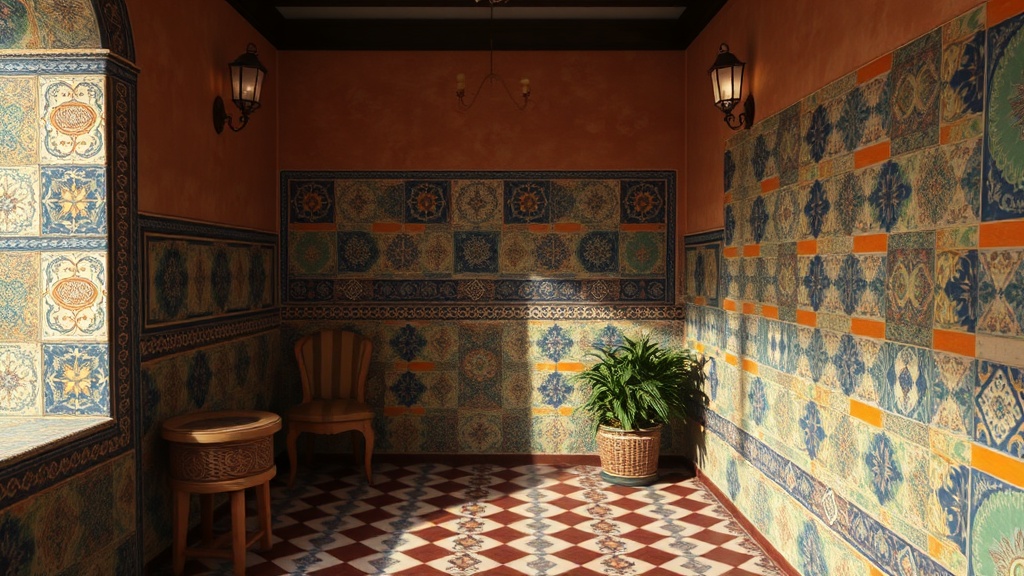
Watching the Rhythms of the Portuguese Tiles

A single chipped corner of an azulejo tile in a Lisbon alleyway tells a story that a glossy postcard never could. It marks a century of rain, the salt from the Atlantic, and the hands that laid it there. When you walk through these streets, you aren't just moving through a city; you're moving through a living, breathing museum of ceramic artistry. This guide focuses on how to observe, appreciate, and respectfully engage with the ceramic heritage of Portugal, particularly in Lisbon and Porto, without becoming just another tourist staring through a lens.
To truly see these cities, you have to look up. The beauty isn't always in the grand monuments; it's in the weathered blue and white patterns decorating the walls of a neighborhood bakery or a crumbling apartment building. Understanding the weight of this history changes how you move through the space. It turns a simple walk into an act of observation.
Where can I find the best traditional tilework in Lisbon?
If you want to see the most striking examples, you shouldn't head to the major museums first. Instead, wander through the Alfama district. The narrow, winding streets act as a natural gallery. In Alfama, the tiles are often more weathered, showing the true age of the neighborhood. You'll see patterns that have been faded by the sun and slightly displaced by time—this is where the real character lives.
For a more structured look, the National Tile Museum (Museu Nacional do Azulejo) is a necessary stop. It’s located in a former convent and offers a sense of how these pieces evolved from Moorish roots to the elaborate 18th-century designs we see today. However, don't spend all your time indoors. The best way to experience the art is to see how it interacts with the light of a late afternoon in the city. The way the sunlight hits the glazed surfaces can change the entire mood of a street.
In Porto, the vibe shifts. The tiles here often feel more integrated into the architecture of the churches and train stations. The São Bento station is a prime example, where the walls themselves tell a history of Portuguese life through thousands of individual pieces. It’s a place where the architecture isn't just a container for people, but a storyteller. You can find more detailed historical context through the Visit Portugal official site, which provides excellent background on regional-specific traditions.
How do I identify different styles of Portuguese ceramics?
It helps to know what you're looking at. The term azulejos refers to the tiles themselves, but they aren't all the same. You'll often see a distinction between the older, hand-painted styles and the more modern, mass-produced versions. The older pieces often feature intricate geometric patterns or scenes of daily life, while later iterations might be more monochromatic or even abstract.
- The Blue and White Era: Heavily influenced by Chinese porcelain, this is the most iconic look, often seen in the 18th century.
- Geometric Patterns: These are older, often reflecting Moorish influences with repeating shapes and earthy tones.
- Figurative Tiles: These tell specific stories—religious scenes, historical battles, or even simple scenes of fishing and farming.
When you're out in the field, look for the texture. Real, vintage tiles have a slight irregularity to them. They aren't perfectly flat like a modern subway wall. That slight imperfection is what gives the city its warmth. If you want to learn more about the technical side of ceramic history, the UNESCO World Heritage archives often have documentation on the preservation of these architectural styles.
What is the best way to photograph street-level details?
This is where many travelers fall into the trap of the "perfect shot." If you want to capture the soul of a place, stop chasing the wide-angle view. Instead, get close. Look for the way a shadow falls across a cracked tile or how a stray vine of a flowering plant interacts with a ceramic surface. This is the detail that actually stays with you.
Avoid the urge to stand in the middle of a narrow street with a tripod and block the flow of local life. The beauty of these cities is in their movement. If you want to photograph a specific wall, do it quickly and quietly. The goal is to be a witness, not a disruption. A handheld camera or even a high-quality phone is often better than a bulky setup. It allows you to stay mobile and keeps you attuned to the subtle changes in light and shadow.
Consider the time of day. The "golden hour" isn't just for the sunsets; it's for the way the light hits the glazed surfaces of the buildings. In the early morning, the light is soft and even, which is great for seeing the subtle color variations in the ceramics. In the late afternoon, the light is more directional, creating high-contrast shadows that can add a dramatic, moody feel to your photos. This isn't about getting a pretty picture; it's about capturing the texture of the city.
| Location | Primary Style | Best Time to Visit |
|---|---|---|
| Lisbon (Alfama) | Weathered/Historical | Early Morning |
| Porto (São Bento) | Large-scale/Narrative | Mid-day for clarity |
| National Tile Museum | Curated/Educational | Anytime |
The most profound thing you can do is simply sit. Find a small café with a tiled exterior, order a coffee, and just watch. Watch the way the light moves across the walls as the sun climbs. Watch the way the locals move through these spaces. When you stop trying to "capture" the moment and start actually living in it, the city reveals its true self. That's when the tiles stop being just decorations and start being the very skin of the culture.