Why Do Strangers Talk More on Bucharest's Metro Than Any Other Subway?

Challenging the Cold City Myth
There's a persistent idea that Eastern European capitals are dour places where commuters stare at their shoes and silence hangs heavy over crowded platforms. Bucharest's metro system quietly dismantles this assumption every single day. Underground Romania doesn't feel like the grim, utilitarian transit networks of popular imagination. Instead, it's a space where conversation bubbles up unexpectedly, where elderly women share snacks with strangers, and where the rhythm of the cars seems to invite a particular brand of candid human connection that's becoming rare elsewhere.
The misconception isn't entirely random. Decades of political isolation left their mark on how outsiders perceive Romanian cities. Documentaries and films focused on grey concrete blocks and hardship narratives. What they missed was the flip side of that history—the way communities developed tight bonds in shared spaces, the manner in which public transit became a kind of living room for a population that often lacked private gathering places. Bucharest's metro, opened in 1979 and expanded steadily since, carries this legacy. It wasn't designed as social infrastructure, but that's precisely what it became.
What Makes the Metro Different from Surface Transport?
Above ground, Bucharest moves at a frantic pace. Traffic snarls the boulevards. Scooters weave between cars. Sidewalks crack underfoot while pedestrians rush past with purpose. The metro exists in a different temporal zone entirely. Descend the long escalators at stations like Universitate or Unirii, and something shifts. The temperature drops. The noise muffles. Time stretches.
This isn't romantic projection. Anthropologists studying urban transit have noted that subway systems create unique social environments. The enclosed space, the shared vulnerability of being underground, the temporary suspension of above-ground identities—it all contributes to a distinctive atmosphere. In Bucharest, this phenomenon manifests in particularly pronounced ways. Perhaps it's the still-relatively-affordable fares that keep the demographic mix broad. Maybe it's the stations' Soviet-era grandeur, those high ceilings and marble walls that feel almost ceremonial. Whatever the combination, conversations start here that wouldn't happen on a bus or tram.
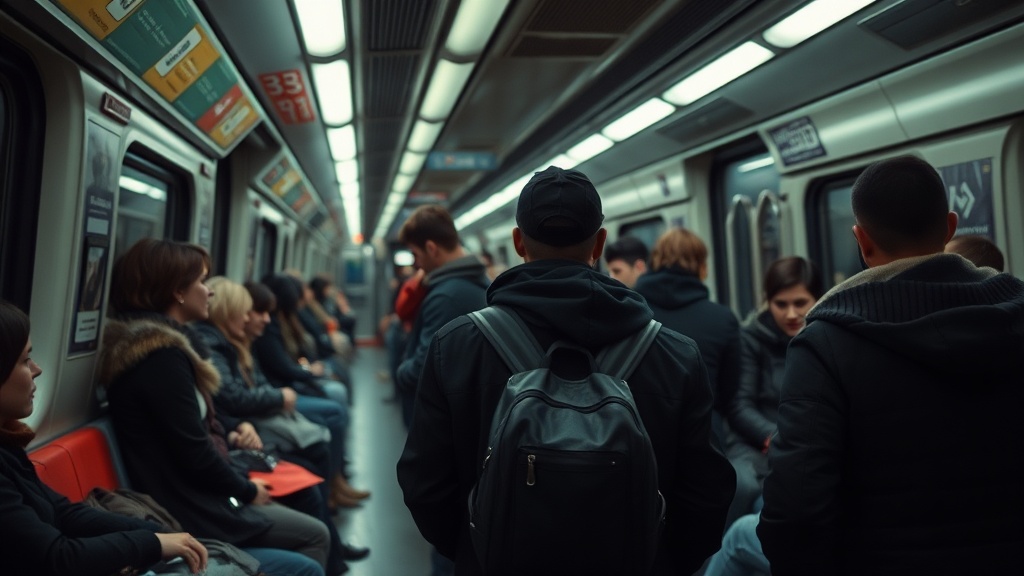
Watch a typical rush hour scene at Piața Victoriei. Two women who've never met discuss the price of tomatoes at the piața agroalimentară nearby. A student helps an elderly man handle the new contactless payment system, then stays to chat about his grandchildren in Cluj. Someone drops a bag of plums; three different people bend to help gather them. These aren't isolated incidents. They're patterns. The metro functions as a kind of social equalizer in a city where inequality has become increasingly visible above ground.
Where Can You See This Culture Most Clearly?
Certain lines and stations concentrate this phenomenon more than others. The M1 line, running north to south through the city's older neighborhoods, carries a different energy than the newer M5. Stations serving the mahala (traditional working-class quarters) like Crângasi or Dristor pulse with conversation. Morning commuters discuss last night's football matches. Evening riders debate political scandals playing out on their phones. The shared screens create instant communities of attention.
The transfer stations deserve particular attention. Unirii, where M1 and M2 intersect, functions almost like a town square. People don't just rush through. They pause. They greet acquaintances. Small commerce thrives—older women selling hand-knitted socks or homemade zacuscă from bags, tolerated by authorities in a way that speaks to the metro's unofficial social function. This isn't chaotic informality; it's structured by unspoken rules. Vendors know which cars to enter, which doors to stand near, how to read the mood of a particular crowd.
The newer stations on the M5 line present an interesting contrast. Cleaner, brighter, more digitally integrated—they feel like they could be anywhere in Europe. Yet even here, the old habits persist. Passengers who rode the original lines for decades bring their conversational customs with them. They teach the patterns to younger riders. Culture propagates through repetition, through example, through the gentle correction of someone who insists on acknowledging the person squeezed next to them.
The Quiet Rituals That Build Connection
It's not all conversation, of course. Much of the metro's social life operates in silence. The way passengers arrange themselves in cars follows patterns. Regulars know which doors align with which exits at their destination stations. They form loose clusters, leaving space while maintaining proximity. Eye contact happens differently here than in Western European subways—more frequent, held slightly longer, rarely aggressive.
There's a particular choreography to offering seats. The elderly don't demand; they hover. Younger passengers watch for the hover and respond before it's requested. The exchange involves minimal words but significant social information. Who gives up their seat, how quickly, whether they make eye contact or stare at their phone—these are communications about values, about class, about how individuals position themselves within the city's social fabric.
How Does This Compare to Subway Culture Elsewhere?
I've spent time observing underground transit in dozens of cities. Tokyo's metro operates with exquisite politeness and absolute silence. New York's subway runs on practiced anonymity punctuated by occasional explosive interactions. London's tube maintains a collective fiction that everyone is alone together. Paris's métro carries a particular intellectual energy—people reading philosophy texts, engaging in intense private arguments with invisible interlocutors.
Bucharest occupies a different position. The social contract here permits, even encourages, a level of casual interaction that would feel intrusive elsewhere. This isn't about friendliness per se—Romanians can be as reserved as anyone. It's about the specific context of the metro as shared domestic space. The underground doesn't feel foreign or threatening. It feels familiar, familial even.
Some attribute this to Romania's rural roots, the way village social patterns survived urbanization and adapted to new environments. Others point to the shared experience of the communist period, when private life retreated into smaller spaces and public areas became extensions of home. Both explanations carry weight. Neither fully captures what happens when the doors close and the train accelerates through the dark tunnels beneath Bucharest's streets.
Documenting the Underground Social World
For anyone interested in urban anthropology or simply curious about how cities actually function, Bucharest's metro offers remarkable access. You don't need permission. You don't need special equipment. You just need to ride, observe, and resist the urge to plug into headphones. The patterns become visible quickly. The same faces at the same times. The greetings across cars. The way bad news travels—everyone somehow knowing simultaneously when something significant has happened in the city above.
Photography presents ethical challenges here. Unlike street photography above ground, metro documentation captures people in enclosed spaces where they can't easily exit the frame. The Romanian photography community has developed thoughtful approaches to this, often favoring environmental shots over individual portraits, focusing on hands and objects rather than faces. Bucurestii Vechi si Noi, a local heritage documentation project, maintains extensive archives of metro life that respect this boundary.
Visitors often ask whether they should attempt to join these conversations. The answer depends on context and language ability. English proficiency varies widely—younger Romanians often speak it fluently; older generations may not. But the barrier isn't primarily linguistic. It's about reading the room. Some cars buzz with collective energy. Others maintain contemplative quiet. Learning to distinguish between them is part of learning the city.
The Future of Metro Culture
Change arrives slowly underground but arrives nonetheless. Contactless payment systems, introduced recently, alter the entry rituals. Escalator etiquette shifts as new generations establish their own patterns. The ongoing expansion of the network brings new populations into contact, diluting some customs while reinforcing others.
What seems stable, though, is the fundamental character. Bucharest's metro resists the pure functionality that dominates newer systems. It remains stubbornly social, insistently human. In an era of increasing isolation, of algorithm-curated experiences and private screens, this quality feels increasingly precious. The metro doesn't solve the city's problems. It doesn't fix inequality or erase the visible poverty at certain station exits. But it creates a space where different Bucharests coexist, acknowledge each other, occasionally connect.
That matters. Cities aren't just architecture and infrastructure. They're accumulated patterns of human interaction, maintained through countless small decisions about whether to meet a stranger's eye, whether to ask about the book someone is reading, whether to acknowledge the shared experience of moving through underground darkness together. Bucharest's metro keeps choosing connection. The rest of the city—and visitors lucky enough to witness it—benefits from that choice.
For those planning to explore this underground culture, Metrorex provides route maps and schedule information. The Bucharest city guides from Time Out offer broader context about neighborhoods accessible via the system. Ride during different hours. Morning rush carries different energy than late evening. Weekends transform the demographic mix entirely. Each variation reveals another facet of how this city actually lives.