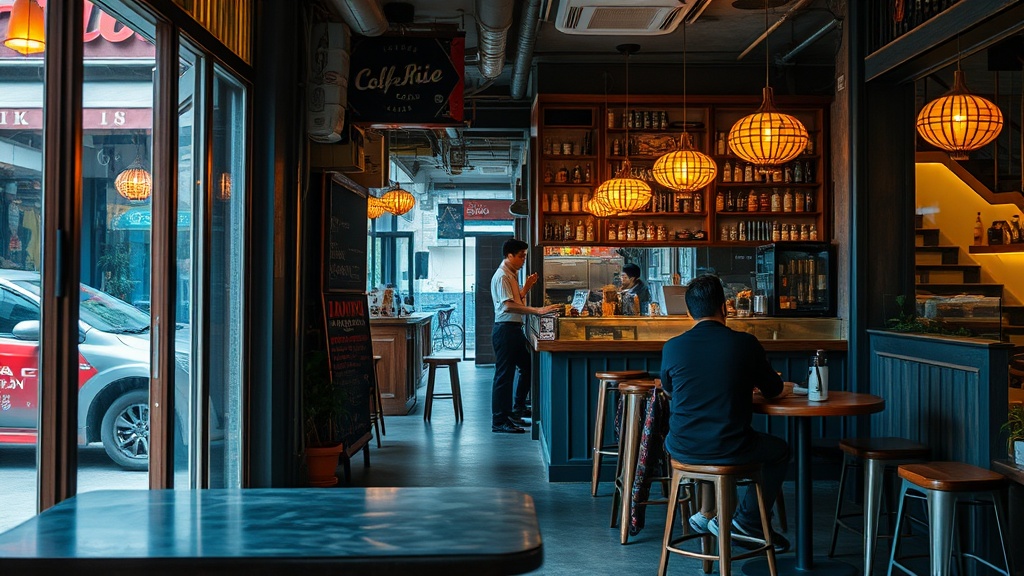
Navigating the Coffee Culture of Hanoi's Hidden Cafes

How do you find the best coffee in a city where the best spots don't even have signs? This guide explains how to identify, locate, and order from the hidden coffee shops tucked away in Hanoi's narrow alleyways. You'll learn the difference between coffee varieties, how to spot a "real" local spot, and how to handle the unspoken etiquette of the city's cafe culture.
What is the difference between Egg Coffee and Salt Coffee?
Egg coffee (Cà Phê Trứng) is a creamy, custard-like concoction made with whisked egg yolks and condensed milk, while Salt Coffee (Cà Phê Muối) uses a salted cream top to balance the bitterness of the brew. Both are staples of the Hanoi-style cafe scene, but they offer very different textures.
If you're looking for something heavy and dessert-like, go for the egg coffee. It's thick. It's rich. It feels more like a treat than a caffeine hit. You'll often see it served in a small glass nestled in a bowl of warm water to keep the temperature stable—a small detail that makes a big difference in the experience.
Salt coffee, on the other hand, is a bit more polarizing. The salt isn't there to make it taste like seawater; it's there to sharpen the sweetness of the milk and cut the bite of the dark roast. It's a fascinating bit of culinary chemistry that you'll find in many small shops around the Old Quarter.
For those curious about the history of these drinks, the history of coffee culture in Southeast Asia shows how much local adaptation matters. In Hanoi, coffee isn't just a beverage; it's a ritual of slowing down.
To help you choose your first order, I've put together a quick comparison:
| Drink Type | Primary Flavor Profile | Best Time to Drink | Texture |
|---|---|---|---|
| Cà Phê Trứng (Egg Coffee) | Sweet, vanilla, custard-like | Mid-morning or late afternoon | Thick and velvety |
| Cà Phê Muối (Salt Coffee) | Sweet, salty, savory-sweet | Afternoon pick-me-up | Creamy with a slight bite |
| Cà Phê Nâu (Condensed Milk) | Deeply sweet, heavy, robust | Anytime | |
| Cà Phê Đen (Black Coffee) | Early morning | Thin and intense |
How do you find hidden cafes in Hanoi's alleyways?
Finding the best cafes requires looking for narrow, unassuming entrances (often just a single doorway or a small staircase) that lead into older buildings. Most of the legendary spots in Hanoi aren't on the main-road storefronts; they're hidden behind laundry lines, tucked behind small grocery stalls, or up the third flight of a crumbling apartment building.
Don't look for neon signs or large menus. Look for the signs of life. Is there a single plastic stool sitting on a doorstep? Is there a small, weathered staircase leading upward? That's your cue. I've spent many afternoons simply watching the way people move through these spaces. There is a certain rhythm to the way a local enters a doorway—a quick, practiced step that tells you they know exactly where they're going.
The best spots often look like they haven't changed since the 1990s. The furniture is usually low-profile, often using the ubiquitous small plastic stools that you see everywhere in Vietnam. These aren't just for kids; they're the standard for many adult social gatherings here. It forces a certain posture—a way of sitting that is closer to the ground and more connected to the street level.
If you find yourself in a particularly narrow alley, don't be afraid to follow the scent of roasted beans. Sometimes, the most rewarding experiences come from the places that don't even bother with a Google Maps pin. It's a bit like watching the rhythms of a city—you have to be present to catch the small details that make the place what it is.
- Look Up: Many cafes are on the second or third floor of "tube houses."
- Follow the Locals: If you see a crowd of people sitting on tiny stools, there is a reason.
- Check the Stairs: If a staircase looks too narrow or steep, it's likely a gateway to a cafe.
- Ignore the Glitz: The best coffee often comes from the most unpretentious-looking doors.
How much does a coffee cost in Hanoi?
A standard cup of coffee in a local, non-tourist cafe will cost between 20,000 VND and 45,000 VND (roughly $0.80 to $1.80 USD). Prices fluctuate depending on whether you are in a "hidden" alleyway shop or a more modern, air-conditioned establishment.
It's incredibly affordable. You can spend an entire afternoon tucked into a corner of a cafe for the price of a single sandwich in London or New York. This affordability is part of why the coffee culture is so pervasive; it's accessible to everyone, from students to businessmen.
When paying, you'll often find that many smaller shops are cash-only. It's worth keeping small denominations of Vietnamese Dong on you. Most of these places don't use large-scale credit card machines—they rely on the simplicity of cash and local transfer apps. This isn't an inconvenience; it's part of the charm. It keeps the transaction human and direct.
One thing to note: if you find a place that looks a bit "too" polished, you're likely paying for the air conditioning and the Wi-Fi rather than the soul of the coffee. The real magic happens in the places where the floor is slightly uneven and the walls have a bit of character. I've often found that the most profound observations happen when I'm sitting on a stool no higher than my knees, watching the world go by.
The coffee here is often made with Robusta beans, which are much higher in caffeine and have a more bitter, earthy profile than the Arabica beans common in the West. This is why the addition of condensed milk or egg foam is so vital—it balances the intensity of the brew. It's a heavy, unapologetic drink.
If you find yourself needing a break from the sensory overload of the streets, find a cafe with a view of a small courtyard or a narrow alley. The perspective shift is immediate. You go from the chaos of the motorbikes to a quiet, shadowed corner. It's a necessary reset. I've learned that the best way to understand a city isn't by moving through it at high speed, but by finding a place to sit and letting it move around you.
For more tips on navigating urban environments, you might find this guide to urban transit helpful for understanding the movement of people in dense cities.
The next time you're wandering through the streets of the Old Quarter, don't just look for the big signs. Look for the small, weathered doorways. Look for the steam rising from a small stove. That's where the real Hanoi is waiting.
Steps
- 1
Look for the Low Stools
- 2
Seek Out the Alleys
- 3
Order the Signature Brews
- 4
Embrace the Slow Pace