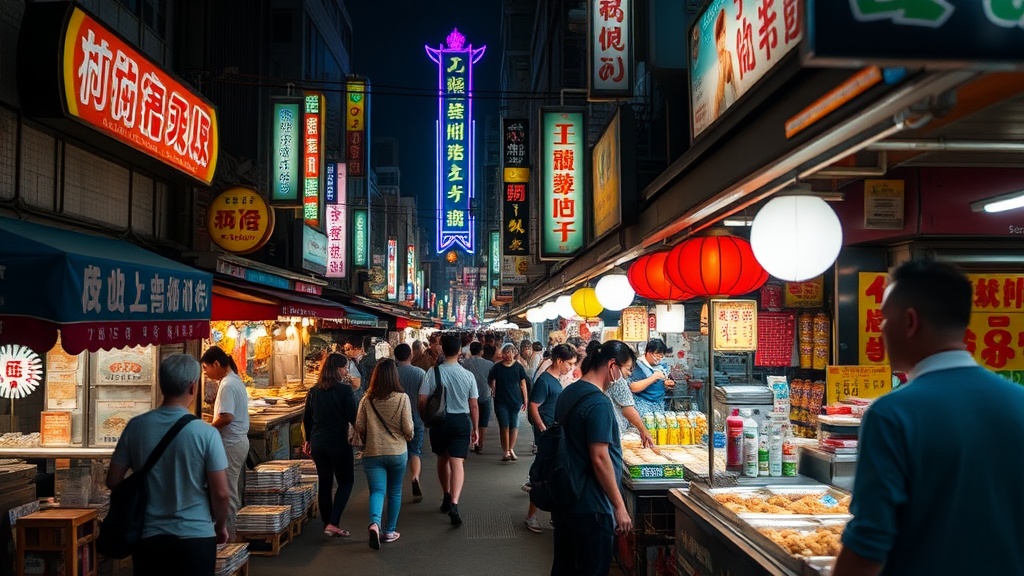
Navigating the Night Markets: A Local's Guide to Taipei's Food Stalls

A vendor in Raohe Night Market stands before a blackened iron griddle, his movements rhythmic and practiced. He flips a thin sheet of dough, pours a precise amount of egg, and adds a dusting of scallions before folding it into a crispy, golden pocket. The steam rising from the griddle carries the scent of toasted sesame and fried shallots. This is not a choreographed performance for tourists; it is the efficient, repetitive labor of a person who has perfected a single craft over decades. To navigate Taipei’s night markets effectively, one must look past the neon signage and focus on these small, repetitive motions of mastery.
Taipei’s night markets are more than just dining destinations; they are complex, living ecosystems of commerce and community. Whether you are standing in the crowded alleys of Ningxia or the sprawling expanse of Shilin, the sensory input can be overwhelming. Success in these spaces requires a blend of observation, tactical movement, and an understanding of local etiquette. This guide provides the structural knowledge necessary to move through these markets with intention.
Selecting Your Market: Understanding the Topography
Not all night markets serve the same purpose or cater to the same culinary niches. Choosing the right location based on your specific interests will prevent wasted time and unnecessary crowds.
- Shilin Night Market: The largest and most famous. It is a massive complex that offers a wide variety of everything from clothing to high-end fried chicken. While it is the most tourist-friendly, it is also the most crowded. Go here for the sheer scale of the experience and iconic items like Hot Star Large Fried Chicken.
- Raohe Night Market: A more linear, single-street market that is easier to navigate. It is highly concentrated around the beautiful Ciyou Temple. It is the best place to find traditional staples like Pepper Buns (Hujiao Bing).
- Ningxia Night Market: Smaller and more focused heavily on traditional Taiwanese cuisine. It is a favorite among locals and is excellent for those who want to focus strictly on high-quality, traditional food without the distraction of retail stalls.
- Keelung Miaokou Night Market: Technically just outside Taipei, but essential for seafood lovers. The focus here is on fresh, coastal flavors and more robust, savory broths.
The Logistics of Consumption: Practicalities of the Street
Eating in a night market is a physical activity that requires preparation. You are rarely sitting at a formal table; you are often standing, leaning against a wall, or sitting on a tiny, low-profile plastic stool.
Managing Waste and Hygiene
One of the most common mistakes is carrying empty containers through a crowd. Most vendors will provide a small paper bag or a napkin, but they do not have a dedicated cleaning service for your used items. Look for the designated trash stations, often located near the exits or near the entrance of the market. If you see a vendor with a large bin near their stall, it is acceptable to dispose of your small wooden skewers or paper cups there, but never leave them on a public table.
The Art of the "Standing Meal"
In many high-traffic areas, there are no seats. You will see people eating Oyster Omelets while standing in a small circle. If you see a small cluster of people, do not be afraid to join the periphery. If you are eating something that requires a spoon, such as Beef Noodle Soup, look for the small "standing tables" or "folding stools" often tucked into the corners of stalls. If a stall has a small sign with a stool icon, it is a signal that they accommodate short-term seating.
Payment Etiquette
While many modern stalls in Taipei now accept EasyCard (the ubiquitous transit card used for the MRT), many of the most traditional, high-quality vendors remain cash-only. Always carry small denominations of New Taiwan Dollars (TWD). Large bills can be a burden for a vendor handling small transactions, and having exact change speeds up the process for everyone in the queue. If you are using an EasyCard, ensure it has a sufficient balance before you arrive to avoid the friction of a failed transaction at a busy stall.
A Curated Hit List: What to Seek and How to Identify It
To find the best food, you must look for specific visual cues. A high-quality stall is often defined by its consistency and the specialized equipment it uses. Do not look for the most colorful sign; look for the most specialized one.
The Pepper Bun (Hujiao Bing)
Found most famously at the entrance of Raohe, these are baked in a traditional clay oven. Look for the heavy, cylindrical clay oven—the heat from which is essential for the texture. The bun should be crispy on the outside with a slight char, while the interior remains juicy with minced pork and heavy black pepper. A good vendor will have a queue of locals, not just tourists, as the turnover ensures the dough remains fresh.
Oyster Omelet (O-a-chien)
This is a quintessential Taiwanese dish that balances savory, sweet, and chewy textures. The key is the starch; a perfect oyster omelet uses sweet potato starch to create a translucent, chewy coating around the oysters and eggs. If the omelet looks overly greasy or the starch is thick and opaque, move to the next stall. The best versions are served with a light, slightly sweet red sauce.
Braised Tofu and Mushrooms
Look for stalls that feature large, steaming vats of dark, aromatic liquid. This is likely Lu Wei (braised snacks). This is where you find the quiet resilience of the market—the slow-cooked, deeply flavored components that require hours of simmering. It is a perfect way to sample various textures, from silky tofu to chewy mushrooms, often seasoned with soy, star anise, and cinnamon.
Bubble Tea and Shaved Ice
To finish, you will need a palate cleanser. While Bubble Tea (Boba) is ubiquitous, look for shops that hand-roll their pearls or use high-quality loose-leaf tea. For something more substantial, seek out Snow Ice (Xue Hua Bing). Unlike traditional shaved ice, this is made by freezing a thin layer of milk or fruit juice and shaving it into incredibly fine, ribbon-like crystals that melt instantly on the tongue.
Navigating the Crowd: Spatial Awareness
The density of a night market can be intense. To move through a space like Shilin without becoming stuck, adopt a specific set of movement rules:
- The "Edge" Rule: Always attempt to move along the perimeter of the market. The center of the street is for the flow of people and the delivery of goods. The edges, near the permanent storefronts, are much easier for navigating between stalls.
- The "Look Ahead" Technique: Before you approach a stall, scan the queue. If the line is long, observe the person at the front. Are they eating quickly and moving on, or are they settling in for a long meal? This will tell you if the wait is a temporary bottleneck or a long-term commitment.
- The "One-Hand" Principle: If you are carrying a drink, hold it in your non-dominant hand. This keeps your primary hand free for navigating, holding onto railings, or managing your wallet.
When you find a stall that resonates with you—perhaps a small, unassuming stand with a single, weathered menu—take a moment to observe the vendor. There is a profound dignity in the way they manage the heat, the steam, and the constant demand. They are not just selling food; they are maintaining a culinary lineage. By approaching these markets with respect for their rhythm and their specialized crafts, you transition from a mere observer to a participant in the local culture.
If you find yourself craving more structured culinary exploration in Asia, you might find interest in how to master the art of street food tours in Bangkok, which offers a different but equally complex perspective on Southeast Asian street culture.
Steps
- 1
Arrive Early to Beat the Peak Crowds
- 2
Follow the Local Queues for the Best Stalls
- 3
Carry Small Change and Napkins
- 4
Sample Small Portions to Try More Variety