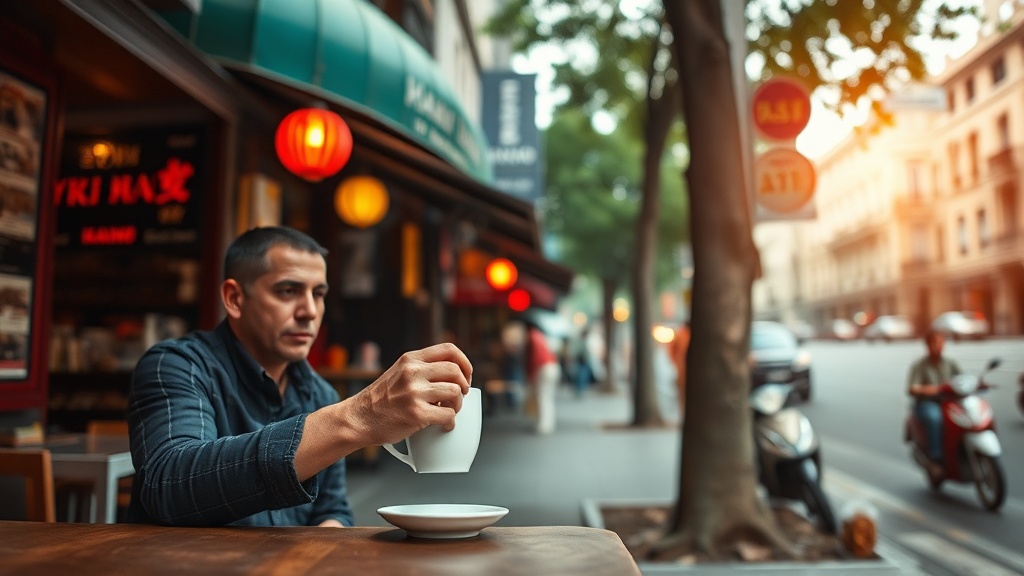
Sipping Through the Streets of Hanoi with a Sidewalk Coffee
A small, dented aluminum stool, barely six inches off the ground, sits on a cracked sidewalk in Hanoi's Old Quarter. Beside it, a glass of dark, viscous liquid rests on a coaster made from a scrap of cardboard. The steam from a nearby bowl of phở drifts through the humid air, mixing with the scent of roasted coffee beans and exhaust fumes. This isn't a curated cafe experience; it's the heartbeat of the city. To understand Hanoi, you have to sit on these tiny stools and watch the chaos unfold at eye level.
The coffee culture here isn't about the quick caffeine hit you get at a Starbucks. It’s a slow, deliberate ritual that defines the rhythm of the street. It's a way of life that bridges the gap between the frantic pace of modern Vietnam and the quiet, old-world charm that still lingers in the narrow alleys.
The street is a theater of movement. Motorbikes weave through gaps that shouldn't exist, and vendors balance heavy baskets on bamboo poles with a grace that defies physics. In the middle of this, a person sits perfectly still, sipping a tiny cup of cà phê. They aren't rushing to a meeting. They are simply being.
What is the Best Coffee to Try in Hanoi?
The most iconic drink you must try is Cà Phê Trứng, or Egg Coffee, which features a rich, velvety yolk cream poured over strong Vietnamese robusta coffee.
While traditional black coffee is the baseline, the variations in Hanoi are where the real magic happens. The city is famous for its use of robusta beans—a bean that is much higher in caffeine and has a more bitter, earthy profile than the arabica beans commonly found in the West. Because of this, the coffee is often paired with thick condensed milk or even egg yolks to balance the intensity.
Here are the three staples you'll encounter most frequently:
- Cà Phê Sữa Đá: The classic iced coffee with sweetened condensed milk. It's strong, sweet, and unapologetically bold.
- Cà Phê Trứng (Egg Coffee): A decadent, custard-like topping made from whisked egg yolks and sugar. It tastes more like a dessert than a morning beverage.
- Cà Phê Muối (Salted Coffee): A newer trend that has taken the city by storm, adding a pinch of salt to the cream to cut the bitterness and heighten the sweetness.
If you want to see the origins of these beans, you can look into the history of coffee cultivation in Vietnam, which has fundamentally shaped the country's social fabric. It's not just a beverage; it's a cultural pillar.
I once sat for an hour near the Hoan Kiem Lake, watching an elderly man prepare his coffee. He didn't use a machine. He used a small metal filter called a phin. He poured the hot water, waited, and watched the drips fall—one by one, rhythmic and steady. There was no way to rush the process. The coffee demanded patience.
How Much Does Coffee Cost on the Street?
Street coffee in Hanoi is incredibly affordable, typically costing between 15,000 VND and 40,000 VND (roughly $0.60 to $1.60 USD) per cup.
You won't find much price variation between the different types of street stalls, though a more "established" cafe with air conditioning will charge a premium. For the authentic experience, you want the stalls that look a bit weathered. The cheaper the stool, the better the coffee usually is.
| Drink Type | Estimated Price (VND) | Estimated Price (USD) |
|---|---|---|
| Cà Phê Sữa Đá | 20,000 - 30,000 | $0.80 - $1.20 |
| Cà Phê Trứng | 35,000 - 50,000 | $1.40 - $2.00 |
| Black Coffee (Nâu) | 15,000 - 25,000 | $0.60 - $1.00 |
It's worth noting that most of these small vendors don't take credit cards. You'll need small denominations of Vietnamese Dong. I always carry a stash of small bills in my pocket—it makes the transaction much smoother when you're sitting on a sidewalk and don't want to fumble with a heavy wallet.
The lack of formal infrastructure is part of the charm. There are no menus printed on heavy cardstock here. Usually, there is just a handwritten sign or a mental list of what the vendor offers. It's a direct, human interaction.
Where Can I Find the Best Sidewalk Coffee?
The best coffee is found in the narrow alleyways (ngõ) of the Old Quarter and near the historic areas of the French Quarter.
You don't need a map to find a good spot; you just need to follow the smell of roasted beans and the sound of clinking glass. Some of the most legendary spots are tucked away in places that look like they shouldn't be able to accommodate a customer. You might find yourself walking through a narrow passage that barely fits one person, only to find a hidden courtyard with a dozen people enjoying their morning brew.
A few places to look for:
- The Old Quarter: The epicenter of street culture. It's loud, it's crowded, and it's perfect.
- Near Hoan Kiem Lake: Great for people-watching while you sip your drink.
- Hidden Alleys near St. Joseph's Cathedral: These offer a slightly more secluded vibe away from the main road traffic.
I've noticed that the best coffee shops often don't have a social media presence. They don't need to. Their reputation is built on the consistency of their brew and the loyalty of the locals who have been sitting on those same tiny stools for decades. It reminds me of small neighborhood tavernas in Athens—the kind of places that exist for the community, not for the tourists.
When you're looking for a place, don't look for neon signs. Look for the steam. Look for the way the light hits a glass of condensed milk. Look for the person who is sitting there, unbothered by the roar of a passing Vespa.
The beauty of Hanoi is that it doesn't try to impress you. It doesn't offer a polished, sanitized version of itself. It's gritty, it's loud, and it's occasionally overwhelming. But when you finally sit down, settle into that uncomfortable stool, and take that first sip of thick, sweet, bitter coffee, the city suddenly makes sense. The chaos becomes a background track to a very quiet, very personal moment.
There is a specific kind of stillness you find in the middle of a crowd. It's a quiet resilience. You see it in the way the street vendors keep moving despite the rain, or the way the coffee makers keep their rhythm despite the changing seasons. It's a reminder that even in a world that feels increasingly fast and digital, there is still immense value in the slow, the tactile, and the local.
The next time you find yourself in a city that feels too loud, don't look for a quiet corner. Look for a small stool. Sit down. Wait for the drip. The city will eventually meet you halfway.