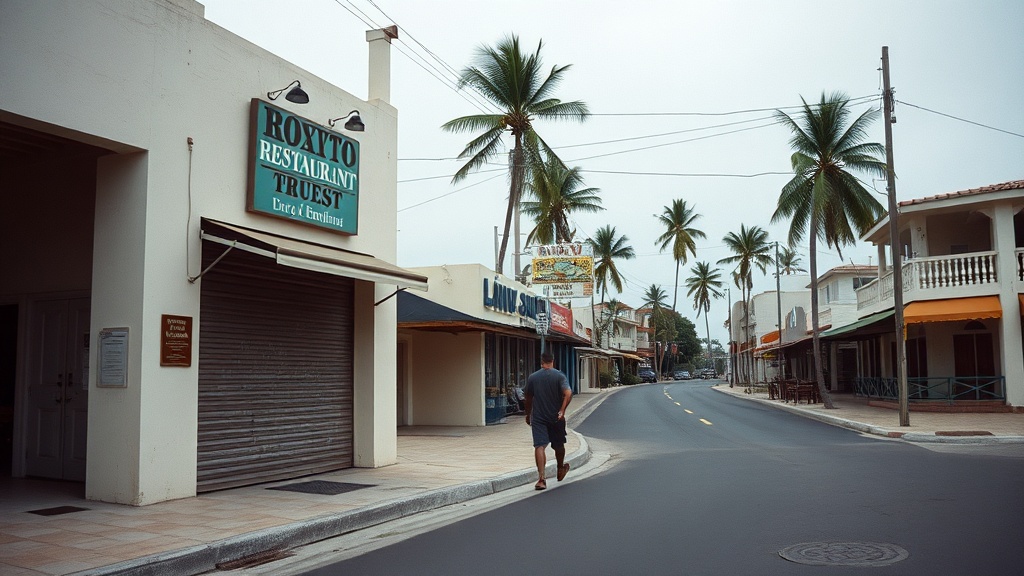
The March Extraction: What Your Spring Break Wellness Trip Actually Costs Local Communities

Let's talk about what happens after the photos.
Not the photos you post. The photos no one takes. The ones from May, when the resort quarter is half-dark and the people who staffed your spa for eight weeks are queuing at the government office in town because the hotel shed most of its seasonal workforce. Those photos.
Spring break wellness tourism has a brand narrative. You've seen it. The hammock ad. The thermal bath ad. The "reconnect with yourself" retreat ad that features a single woman in linen, gazing at a horizon that someone else maintains. The narrative is about restoration—yours. What it omits is the ledger. And the ledger is the real story—one that the hands staffing your spa know all too well.
The Math of a Seasonal Spike
Let's start with the structure, because the structure clarifies everything the marketing blurs.
In beach and wellness resort destinations built on seasonal demand—the Pacific coast of Mexico, Bali's Ubud corridor, the Riviera Maya strip—the business model depends on a sharp demand curve. Hotels fill up. Then they don't. The economics are designed around that swing.
What that means in practice: to service peak volume, properties bring in large cohorts of temporary contract workers. The International Labour Organization has documented the pattern extensively across tourism-dependent economies: seasonal hotel and hospitality employment tends to be short-contract, often without the benefits or protections available to permanent staff, and structured to be released quickly when occupancy drops. The hire is fast, the release is faster, and the worker has no leverage because there are more workers waiting for the same window. This wage disparity in wellness work is the gap between what you pay and what the therapist actually receives—a gap that's baked into the seasonal labor model.
This isn't a fringe observation. A 2023 ILO report on tourism and precarious work in Southeast Asia and Latin America found that seasonal hospitality workers in high-traffic destinations frequently face employment structures with minimal job security and reduced access to social protection compared to permanent staff. The specific ratios vary by destination and property—I'm not going to invent a number to make this sound more precise than it is. The pattern is consistent.
The profit extracted during peak season is substantial. The wage bill for that profit is kept minimal by design. That's not a bug. It's the model.
The Infrastructure Nobody Talks About
There's a secondary cost that doesn't show up in labor discussions, because it's infrastructural and infrastructure is invisible until it fails.
Water.
This one has documented cases. Tulum is the clearest example. The town's aquifer—the Yucatán's freshwater system sits on porous limestone, meaning surface waste filters directly into the water supply—has been under documented stress from the combination of rapid resort development and tourist-season demand spikes. Mexican environmental regulators flagged Tulum's sewage and water management crisis publicly in 2021 and again in 2023; the area was handling tourist volumes its infrastructure was not built to support.
Bali's Seminyak and Canggu corridors have faced similar documented pressure. A 2019 study in the Journal of Sustainable Tourism found that tourist accommodation in Bali consumes significantly more water per day than local households—the disparity is large enough that in concentrated resort areas, local residents have reported reduced water access during peak season. The sewage systems—again, built for base populations—run beyond capacity. The waste goes somewhere that isn't the tourism brochure.
The pattern repeats in other high-density resort zones: Costa Rica's Guanacaste, parts of coastal Oaxaca. The recovery from this strain happens off-season. It's quiet, largely unfunded, and invisible to the people who caused it. The same tourists who photograph the "pristine" beaches in March helped produce the infrastructure stress that a municipal engineer in that town will spend November trying to address.
May. The Extraction Hangover.
This is the part I can't stop thinking about. I've watched it happen in three countries—this is observation, not data, but I'd put money on its consistency.
May arrives. The spring break cohort is gone. The summer shoulder season hasn't started. The hotels don't need the expanded seasonal workforce anymore. They shed back to their year-round core—sometimes below it, because they've overextended on renovations and upgrades timed to the spring rush. Restaurants that built overflow seating for April close those sections. The contractor who got work building that seating now has a gap month. The souvenir market vendor who stocked twice their usual inventory for the spring wave is sitting on unsold product.
The workers who came from inland towns—who moved, paid a deposit on a room, sent money home during the good weeks—are now reverse-migrating. The rental market in resort towns has a whiplash dynamic: rents spike early in the season because landlords know temporary workers need housing fast and have limited negotiating time. They don't drop back down proportionally after season's end because landlords have recalibrated their price floor against what the market proved it would bear. Permanent residents absorb the new baseline.
The housing cost inflation from tourism doesn't have an off-season. The workers do. The prices don't.
"Conscious Resorts" Are Not an Exception
I want to be direct here, because this is where wellness tourism marketing deploys its best deflection.
The major environmental certifications used in resort marketing—Green Globe, EarthCheck, Rainforest Alliance's tourism standard, and the Costa Rica Certificate of Sustainable Tourism among others—focus predominantly on environmental metrics: energy consumption, carbon accounting, waste management, water efficiency at the property level, supply chain sourcing. Their labor standards vary significantly. Some include basic compliance requirements. Few set wage floors above local legal minimums. None structurally change the seasonal employment model.
What this means: a resort can be legitimately certified, bamboo-constructed, and "locally-sourced" branded—and still operate seasonal contract labor with no benefits and no job continuity for the workers in the back of house. These facts don't contradict each other. The certifications address different things than the labor structure.
A resort that plants native trees, offers sunrise meditation, and sources its smoothie fruits from a nearby cooperative can still run the same employment model on its housekeeping and kitchen staff. The label doesn't reach into the back of house.
When a resort's marketing uses the word "empowering" to describe its relationship to the local community, the correct question is: empowering to do what? To be hired for ten weeks and released? To have their housing market repriced annually?
I'm not saying these places are uniquely villainous. I'm saying the structural economics of seasonal tourism produce these outcomes regardless of brand intention. The problem isn't individual resort ethics. It's the model.
What Actually Reduces Extraction (And What Doesn't)
The most honest thing I can tell you is that there's no individual consumer behavior that solves a structural problem. Systemic extraction isn't fixed by conscious booking choices. But there are things that actually reduce your specific footprint, versus things that feel like they do.
Travel off-peak. June, September, early November in most northern hemisphere destinations. You'll pay less. The destination's infrastructure will be less strained. The workers who serve you are the year-round staff, not the temp buffer. The local restaurants won't be running disaster-mode service. You'll actually experience what the place is rather than what it becomes under tourist volume.
Stay longer, less frequently. A two-week stay in one place creates a different economic relationship than seven destinations in ten days. You'll spend more at local markets, build actual familiarity with neighborhoods, and the revenue you generate is more distributed. This isn't a moral argument—it's just a different spending pattern that lands differently.
Eat where locals eat. Resort restaurant economics are almost entirely extractive—the margins go up the ownership chain, not into the community. Street food, market stalls, family-run neighborhood spots: the money circulates locally. The food is also better. This isn't a sacrifice.
Ask about employment practices. Not as a gotcha—genuinely. Ask the front desk whether staff are year-round or seasonal. Ask whether the people in the spa own their practice or are employed by the property. Ask whether the tour guide you're booking is independent or working through an agency that takes the majority of the booking fee. The answers will tell you more than the certifications do.
Or don't go during peak season. Your absence from the spring rush costs the community less than your presence. That's not guilt—it's just math. The infrastructure doesn't strain on an empty week. The housing market doesn't spike for workers who aren't being hired. The temporary labor buffer doesn't get assembled and then discarded if the volume spike doesn't happen.
That last one is what the wellness travel industry can't say, because it's bad for bookings. But it's the honest version of what "sustainable travel" would mean if it meant anything.
The wellness you're sold in those spring break ads is yours. The costs are distributed to the people who live there, work there, pay rent there, drink the water there—and absorb the economic whiplash every May when you're already home and filtering your photos.
Your trip has a cost. It's just not on your credit card.