Tracing the Spice Routes Through Marrakech Souks

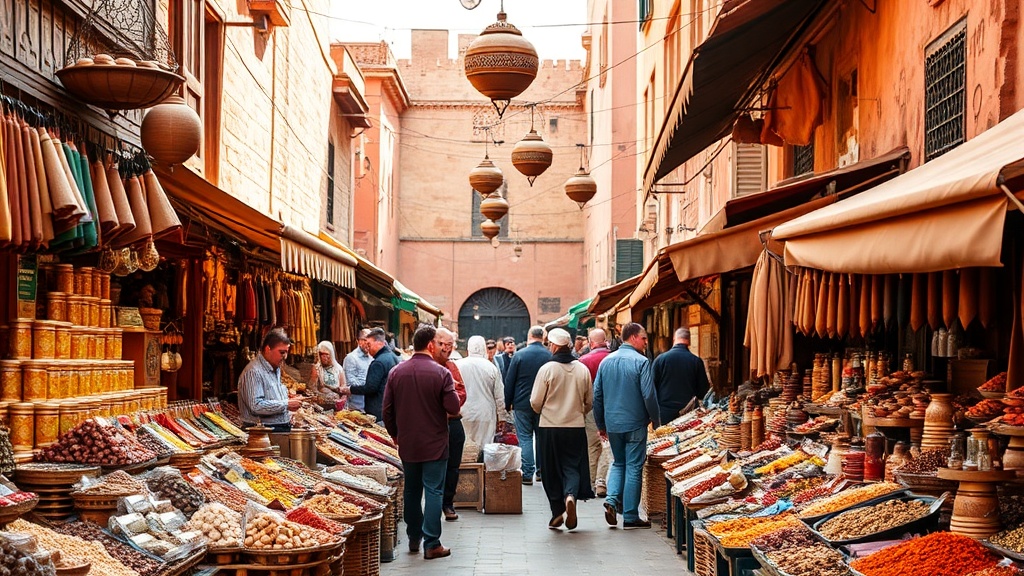
An old man in the Rahba Kedima square sits on a low wooden stool, his hands stained a permanent ochre from years of handling turmeric. He isn't shouting or waving a sample; he simply watches the light hit the conical mounds of saffron and cumin. This guide explores the sensory architecture of the Marrakech souks, specifically focusing on the spice trade routes that define the city's identity. We’ll look at how to identify high-quality spices, how to handle the social nuances of bargaining, and where to find the most authentic ingredients.
The scent hits you before the sight does. It’s a thick, heavy aroma—a mix of dried rosebuds, pungent cloves, and the sharp sting of peppercorns. It stays in your clothes long after you leave the Medina. This isn't just a market; it's a living, breathing history of trade routes that once connected the sub-Saharan salt routes with the Mediterranean. To understand Marrakech, you have to understand its spices.
What are the most important spices to look for in Marrakech?
The most vital spices you'll encounter are saffron, cumin, cinnamon, and ras el hanout. While many tourists reach for whatever looks colorful, the real value lies in the subtle, earthy varieties found in the deeper alleys of the souk.
Saffron is the gold standard here. It's expensive—rightfully so—and you'll see it sold in tiny, precious threads. If a vendor offers you "cheap saffron," it's likely dyed corn silk or safflower. Real saffron has a distinct, slightly medicinal scent and a deep, crimson hue. It’s the kind of detail that separates a casual observer from someone who actually understands the craft.
Then there is Ras el Hanout. The name literally translates to "head of the shop," implying it's the best blend a merchant has to offer. It’s a complex mixture that can contain upwards of thirty different spices. There isn't one single recipe; every master blender has their own secret ratio. It's a family legacy held in a small wooden box.
When you're wandering through the stalls, keep an eye out for these specific varieties:
- Cumin (Kamoun): Look for a deep, brownish color. High-quality cumin has a nutty, earthy scent that isn't overly bitter.
- Turmeric (Kharkoum): It should be a vibrant, bright yellow. It's often used not just for flavor, but as a natural dye for textiles.
- Ginger (Skinjbir): Freshly ground ginger has a much sharper, more pungent bite than the powdered versions found in supermarkets.
- Cinnamon (Qerfa): You'll see both sticks and powder. The sticks are often quite thick and rugged, reflecting their raw, unrefined state.
If you find yourself interested in how these flavors translate to the broader Mediterranean experience, you might enjoy reading about finding the perfect mezze spread in Istanbul. The logic of spice-driven cuisine remains similar across these ancient trade hubs.
How much do spices cost in the Marrakech souks?
Prices vary wildly based on the quality and the specific spice, but you can generally expect to pay between 20 and 150 Dirhams (MAD) per 100 grams for standard high-quality blends. Saffron, however, is a different category entirely and is often sold by the gram rather than the weight.
Don't be surprised if the price drops significantly after a few minutes of conversation. The first price mentioned is rarely the final price. It's a ritual. You'll notice that the most expensive spices are often kept in glass jars or tucked away behind the counter, rather than sitting out in the open heaps. This is a sign of potency and value.
| Spice Type | Estimated Price (MAD) | Notes |
|---|---|---|
| Cumin | 30 - 50 | Look for dark, earthy tones. |
| Turmeric | 25 - 40 | Avoid overly bright, neon shades. |
| Cinnamon | 40 - 60 | Stick to the ground bark. |
| Saffron | 500+ | Sold by the gram; very high volatility. |
A quick tip: if a vendor offers you a "gift" of a sample, take it. It's a gesture of hospitality. However, once you accept, the social contract of the sale begins. It's not a bribe; it's an invitation to engage.
Where can you find the best authentic spice merchants?
The most authentic spice merchants are located in the deeper, narrower streets of the Medina, specifically around the Rahba Kedima square. Avoid the shops located directly on the main thoroughfares of the Jemaa el-Fnaa, as these are often geared toward tourists and may carry lower-grade products.
Look for the shops that don't look particularly "pretty." The best places are often small, cramped, and slightly disorganized. There is a certain dignity in the way these merchants manage their stock. They aren't trying to win an aesthetic award; they are managing a high-turnover, high-quality inventory. You'll see the real experts sitting in the shade, watching the crowd, waiting for the right person to stop and ask a real question.
I've spent hours just watching a single merchant weigh out cloves. There is a rhythm to it—the scale, the small scoop, the way he breathes in the scent of the spice before bagging it. It's a slow, deliberate process. In a world that moves too fast, these men are anchored by the weight of their goods. It's a quiet kind of resilience.
If you want to see how these markets function in different urban contexts, check out our guide on the daily commute and urban transit. While the transport is different, the way people move through these dense, layered environments is a shared human experience.
When you enter a shop, don't rush. The pace of the souk is dictated by the merchant, not your itinerary. If you walk in with a sense of urgency, you'll be treated like a passerby. If you walk in with curiosity, you'll be treated like a guest. This distinction is everything.
The sunlight filters through the wooden slats above the street, creating stripes of light and shadow on the ground. It makes the piles of paprika and ginger look almost sculptural. It's easy to get lost in the geometry of it all. But remember, you aren't just here for the colors. You're here for the history that is ground into every fine powder.
One thing to watch out for: the "tourist blends." These are often overly sweetened or heavily dyed to look more impressive. If a spice smells artificial or has a chemically sharp scent, walk away. Real spices have a depth that doesn't need to shout. They whisper. They wait for you to notice them.
If you find yourself needing to verify the authenticity of certain products or looking for official trade standards, the UNESCO archives on cultural heritage often provide context on how these traditional markets have been preserved through the centuries. It's a way to ground your observations in historical reality.
The air in the spice market is heavy. It's a physical presence. You don't just smell the cumin; you feel it in your throat. It's a reminder that these ingredients are more than just ingredients—they are the blood and bone of the region's culture. They've traveled across deserts and through mountain passes to end up in a small burlap sack in a Marrakech alleyway. And that's exactly where they belong.