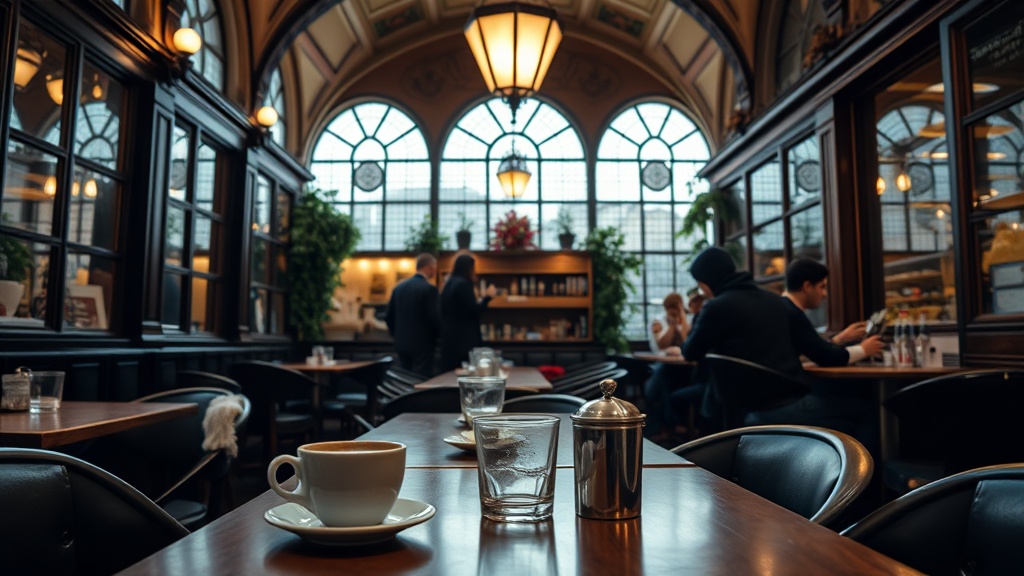
Why You Should Drink Coffee in a Traditional Viennese Coffee House

This article explains the cultural significance of the Viennese coffee house, the specific etiquette required to navigate these establishments, and the practical reasons why this tradition offers a superior way to experience the city of Vienna. You will learn how to order correctly, what to expect from the service, and how to utilize these spaces as much more than just a place to consume caffeine.
The Concept of the Living Room
A traditional Viennese coffee house, or Kaffeehaus, is not a place for a quick caffeine fix. Unlike the modern "grab-and-go" culture prevalent in North America or Northern Europe, the Viennese coffee house is designed as an extension of the private home. The fundamental rule of these establishments is that once you purchase a single cup of coffee, you have purchased the right to occupy that space for as long and as infrequently as you wish.
This distinction is vital for travelers to understand. In many global cities, sitting with an empty cup for an hour is viewed as a slight to the establishment. In Vienna, particularly in historic locations like Café Central or Café Sperl, it is the expected behavior. You are not merely a customer; you are a temporary resident of a public living room. This allows for a specific type of slow travel where the goal is observation rather than movement.
The architectural layout of these cafes often prioritizes long, marble-topped tables and deep, upholstered booths. These spaces are designed to facilitate long-form reading, writing, or quiet contemplation. This is why the coffee house remains a cornerstone of Viennese identity; it provides a sanctuary for the intellect and a respite from the density of urban life.
Navigating the Menu and Ordering Etiquette
The menu in a traditional coffee house can be intimidating due to the sheer number of specialized coffee preparations. To order like a local, you must understand the specific terminology used for the most common drinks. A standard Melange is the most popular choice—it is similar to a cappuccino but typically uses milder coffee and is topped with steamed milk and a thick layer of froth.
Other essential drinks to know include:
- Einspänner: A strong black coffee topped with a thick layer of heavy whipped cream. It is traditionally served in a glass and meant to be sipped through the cream.
- Kapuziner: A small coffee with a dollop of whipped cream, often served in a small cup, historically a way to lighten the bitterness of strong coffee.
- Verlängerter: A long black coffee, essentially an Americano, but prepared with more traditional methods.
- Franziskaner: A coffee served with both steamed milk and a layer of whipped cream.
When ordering, it is common to receive a small glass of water alongside your coffee. This is not a courtesy for a palate cleanser, but a standard part of the service. The water serves to hydrate the guest and is often served on a small tray with a silver spoon. If you are looking for a snack to accompany your drink, look for Apfelstrudel (apple strudel) or Sachertorte (a dense chocolate cake with apricot jam). These are not merely desserts; they are foundational components of the coffee house experience.
The Practical Benefits of Slow Consumption
While it may seem counterintuitive to spend time in a seated position while traveling, there are practical advantages to the coffee house culture. Traveling through European cities often involves a high degree of sensory input—noise, crowds, and constant navigation. The coffee house provides a structured way to decompress without leaving the city center.
Using a coffee house as a "base camp" allows you to organize your day. You can use the time to consult maps, review your itinerary, or even catch up on correspondence. Because the service is designed to be unobtrusive, you can exist in the space without the pressure of constant interaction with staff. This is a stark contrast to the high-turnover models found in many tourist-heavy cities. If you have spent your morning exploring the museums of the MuseumsQuartier, returning to a quiet cafe provides a necessary mental reset before your next activity.
This method of travel also encourages a deeper level of observation. By sitting in one place, you notice the subtle details of the city: the way the light hits the cobblestones outside, the specific cadence of local conversation, and the ritualistic movements of the waiters. This is where the true culture of a city reveals itself—not in the monuments, but in the repetitive, quiet actions of its citizens.
Understanding the Role of the Waiter
The service in a Viennese coffee house is often described by travelers as "formal" or even "curt." It is important to reframe this perception. The waiters, or Ober, are trained in a tradition of professional distance. They are not there to be your friend or to engage in small talk; they are there to facilitate your solitude.
A waiter will typically approach your table to take your order and will return to check on you only when necessary. This is not a lack of hospitality, but a high form of it. They respect your space and your privacy. When you are ready for the bill, you do not need to wave them down frantically. A simple nod or a brief moment of eye contact is usually sufficient. In many traditional establishments, you will pay at the counter rather than at the table, though this varies by location.
It is helpful to note that the pace of service is intentionally slow. If your coffee takes ten minutes to arrive, it is because it is being prepared with precision. Do not rush the staff; the ritual of the service is as important as the beverage itself. This level of structured service is a hallmark of Central European hospitality, much like the specialized tea house culture in Taipei, where the focus is on the ritual of the preparation rather than the speed of delivery.
Selecting the Right Establishment
Not all coffee houses are created equal. Depending on your goal for the afternoon, you should choose your venue based on the atmosphere it provides. There are three general categories of establishments in Vienna:
The Grand Historic Cafes
These are the legendary names like Café Sacher or Café Central. They feature high ceilings, marble tables, and a sense of immense history. These are excellent for people-watching and feeling the weight of the city's past, but they can be crowded and more expensive. They are best visited during off-peak hours, such as mid-afternoon on a weekday.
The Neighborhood "Kaffeehaus"
These are smaller, often family-run establishments located away from the primary tourist loops (the 1st District). These are the most authentic way to experience the culture. They are quieter, more affordable, and you will see fewer English speakers. This is where the locals go to read the newspaper and spend their afternoons.
The Modern Interpretations
In recent years, a new wave of "Third Wave" coffee shops has emerged in districts like Neubau. While these offer excellent quality coffee and a more contemporary aesthetic, they do not offer the same historical or cultural depth as the traditional Kaffeehaus. If your goal is to understand the specific heritage of Vienna, stick to the traditional establishments.
A Summary of Best Practices
To ensure you have a successful and respectful experience in a Viennese coffee house, keep these practical tips in mind:
- Don't rush: The primary purpose of the cafe is to allow you to linger. Do not feel obligated to leave once your drink is finished.
- Order with precision: Use the specific names for coffee types (Melange, Einspänner, etc.) to ensure you get exactly what you want.
- Respect the silence: While conversation is allowed, these are spaces for quietude. Keep your volume moderate to respect the surrounding patrons.
- Observe the service: Understand that the formal, distant service is a sign of professional respect for your privacy, not a lack of friendliness.
- Use it as a tool: Bring a book, a journal, or a map. The coffee house is a functional space for your travel needs.
By embracing the slow, methodical nature of the Viennese coffee house, you move beyond being a mere tourist and begin to engage with the actual rhythm of the city. You are participating in a centuries-old tradition of public solitude and intellectual rest.