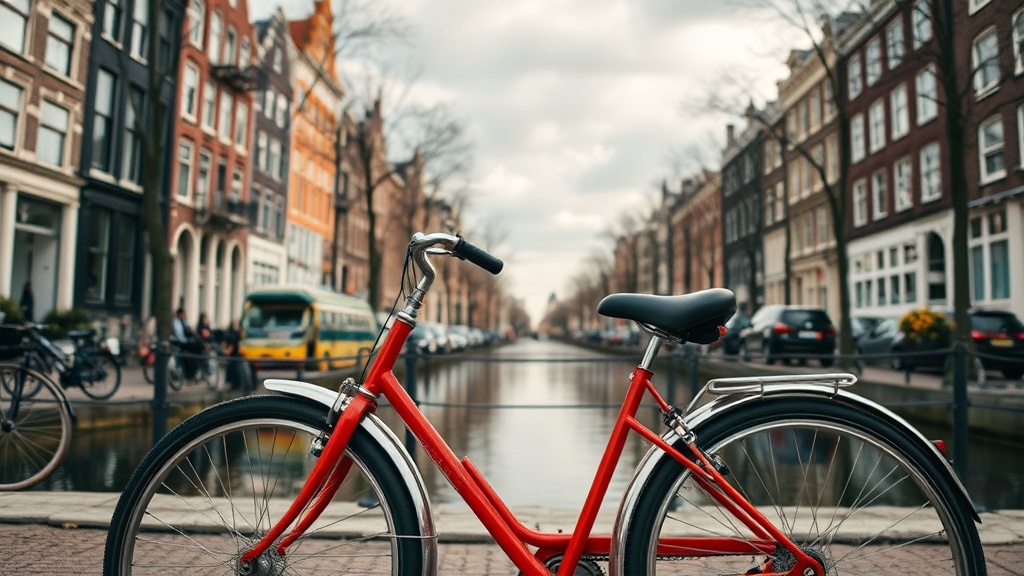
Why You Should Rent a Bicycle to Explore Amsterdam

Navigate the Canal Ring with Ease
Discover Hidden Neighborhood Gems
Experience True Local Freedom
There are more bicycles in Amsterdam than there are people. With a population of approximately 870,000 and an estimated 880,000 bicycles, the city operates on a two-wheeled logic that dictates the flow of its streets, its economy, and its social rhythm. For a traveler, renting a bicycle is not merely a leisure activity; it is the most efficient way to navigate the canal rings, avoid the bottlenecks of the tram lines, and experience the city at the same scale as its residents. This guide outlines the practical advantages of cycling in Amsterdam and provides the necessary technical details to ensure your transit is safe and seamless.
The Efficiency of Two Wheels in a Compact City
Amsterdam’s urban layout is a dense network of concentric canal rings and narrow side streets. While the GVB tram system is reliable, it operates on fixed schedules and can become heavily congested during peak commuting hours. A bicycle offers a level of granular mobility that public transport cannot match. You can transition from the heavy tourist corridors of the Jordaan to the quieter, residential streets of the De Pijp neighborhood in minutes, without waiting on a platform or navigating a crowded carriage.
Cycling allows you to bypass the logistical friction of the city. When you use a bicycle, you are not tethered to the stops of the Metro or the frequency of the bus. This is particularly useful when you want to explore the outskirts of the city center, such as the Westerpark or the Oosterpark, where transit connections may be less frequent. The ability to stop anywhere—at a specific corner bakery or a quiet canal bank—makes the bicycle a tool for spontaneous exploration rather than just a means of transit.
Practical Logistics: Renting and Securing Your Bike
When renting a bicycle, you will encounter several different types of models. Most rental shops, such as Black Bikes or Mac Amsterdam, provide heavy-duty "omafiets" (grandmother bikes). These are upright, single-speed or multi-speed bicycles designed for stability and comfort rather than speed. They are built to withstand the vibrations of cobblestone streets and the weight of a pannier bag.
Before you leave the rental shop, perform these three essential checks:
- The Brake Test: Ensure both the front and rear brakes engage firmly. Amsterdam’s streets can be slick with rain or even thin layers of ice in winter, making braking distance critical.
- The Light Functionality: Most rentals include integrated dynamo lights or battery-operated LED lights. Test them immediately; cycling in Amsterdam after dark without functioning lights is both illegal and dangerous.
- The Lock Mechanism: Confirm that the bike comes with both a frame lock (to keep the wheel from spinning) and a heavy-duty chain lock.
Securing your bike is the most critical part of the rental process. Amsterdam is a high-density city, and bike theft is a common occurrence. Never rely solely on the built-in frame lock. Always use the heavy-duty chain lock to secure the frame to a fixed, immovable object like a permanent metal bike rack or a sturdy fence. If you are parking near high-traffic areas like Amsterdam Centraal Station, the extra security of a secondary lock is highly recommended.
Navigating the Rules of the Road
The cycling infrastructure in Amsterdam is world-class, but it is also highly regulated. To avoid collisions and fines, you must adhere to the local "unspoken" rules and formal traffic laws. The most important thing to remember is that the bike paths (fietspaden) are often physically separated from car lanes, but they are still high-speed corridors for cyclists.
- Hand Signals: Just as motorists use indicators, cyclists must use hand signals to indicate turns or stops. If you intend to turn left, extend your arm clearly. This is vital when navigating intersections where cars and trams are present.
- The Tram Track Hazard: Tram tracks run through many of the main cycling paths. These tracks are incredibly dangerous for bicycle tires, especially if they are wet. Always cross tracks at a perpendicular angle (90 degrees) to avoid getting your tire caught in the groove.
- One-Way Streets: Many narrow streets in the Grachtengordel (Canal District) are one-way for cars but two-way for bicycles. Look for the white bicycle icon on the street signs; if you see it, you can cycle against the direction of car traffic.
- Yielding to Pedestrians: While cyclists have right of way on many paths, use caution when approaching pedestrian crossings or areas near heavy foot traffic, such as the Dam Square area.
Optimal Routes for Exploration
To truly understand the city, you should move beyond the central tourist zones. A bicycle allows you to execute longer loops that would be exhausting on foot. Consider these three distinct routes to experience different facets of Amsterdam’s culture:
The Canal Ring Loop
This route takes you through the 17th-century canal belt. It is highly scenic but can be crowded. Focus on the smaller streets in the Jordaan to find quiet corners and local boutiques. This is the best route for photography and observing the architectural details of the narrow canal houses.
The Amsterdam Noord Crossing
Take your bicycle onto the IJzaferry (the free ferry behind Centraal Station) to cross the IJ river into Amsterdam Noord. This area offers a more industrial, spacious, and contemporary vibe. It is home to the EYE Film Institute and the NDSM Wharf. The paths here are wider, making it an excellent area for practicing your cycling skills in a less congested environment.
The Vondelpark Circuit
For a more relaxed experience, head to Vondelpark. While it is a park and not a transit artery, cycling through its winding paths is a quintessential Amsterdam experience. It is a great way to see how locals use the city for recreation and social gatherings. Note that speed limits are much lower within the park to ensure the safety of pedestrians and sunbathers.
Essential Gear and Safety Preparations
While you may see many locals riding without helmets, it is a wise decision for visitors to carry or rent one, especially if you are not used to the aggressive pace of urban cycling. Additionally, the weather in the Netherlands is notoriously unpredictable. A sudden downpour can occur even on a sunny day.
Recommended Gear List:
- Waterproof Outer Layer: A lightweight, packable rain jacket is indispensable.
- Small Backpack: To keep your hands free for steering and to protect your electronics from the wind and rain.
- Offline Maps: Use an app like Google Maps or Citymapper, but ensure you have downloaded the offline area of Amsterdam. GPS can be finicky between the high walls of the canal houses.
Understanding the local rhythm of the city requires more than just looking at the landmarks; it requires moving through the space with intention. Much like shopping at local markets in Marrakesh, the best way to grasp a culture is to engage with its primary modes of movement. By renting a bicycle, you transition from a passive observer to an active participant in the daily life of Amsterdam.